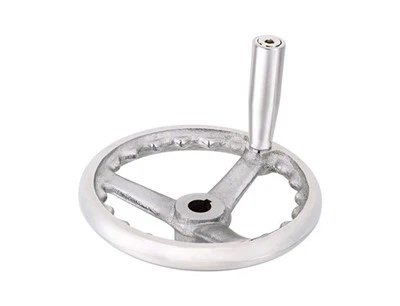
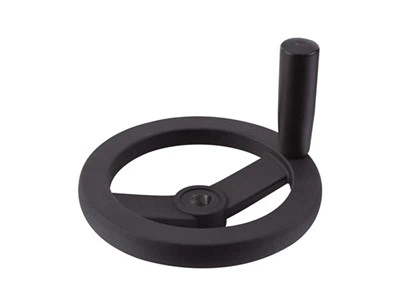
The calculation of handwheel parameters such as diameter, pitch, and stepover must be based on the specific handwheel design requirements. The following are the general steps for handwheel calculation:
1. Determine the Design Requirements
When designing a handwheel, a series of parameters must be determined, such as the table travel and feed rate. These parameters directly impact the calculation of the required handwheel diameter, pitch, and stepover.
2. Calculate the Handwheel Diameter
The handwheel diameter is typically determined based on the table travel and the size of the abrasive wheel. Generally speaking, the handwheel diameter should be large enough to generate sufficient force and precision during rotation. The formula for calculating the handwheel diameter is as follows:
Handwheel Diameter = Table Travel / (2 * π * Abrasive Wheel Diameter)
Where π is approximately 3.14, it is recommended.
3. Calculate the Handwheel Pitch
The handwheel pitch can be calculated based on the feed rate and handwheel diameter. A larger handwheel pitch results in a faster feed rate. The formula for calculating handwheel pitch is as follows:
Handwheel pitch = Feed rate / (π * handwheel diameter)
4. Calculating handwheel pitch
To calculate handwheel pitch, you first need to determine the thread size and then calculate the distance between each thread segment based on that size. The formula for calculating handwheel pitch is as follows:
Handwheel pitch = Thread size / Sum of the distances of the three threads
The distances between the three threads can be determined by measuring the pitch.