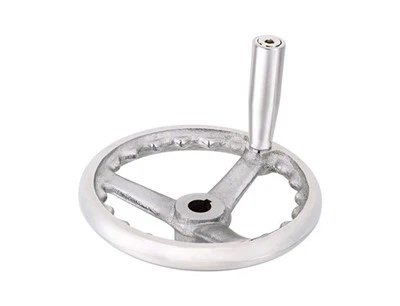
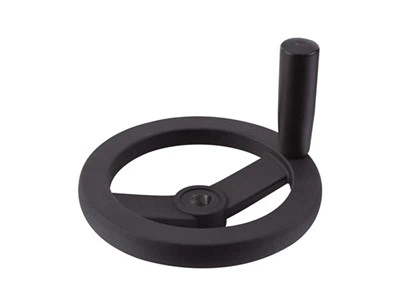
Before discussing whether a handwheel is connected to the controller via an input, we first need to understand the role and function of the handwheel in the entire mechanical system. As a manual controller, a handwheel is primarily used for precision adjustment and positioning, particularly in machining and automation equipment. So, how does a handwheel connect and communicate with the controller?
1. Handwheel Connects to the Controller via an Input Interface
Typically, a handwheel connects to the controller via an input interface. This connection allows the operator to send commands by rotating the handwheel, which the controller then converts into corresponding machine actions. For example, in a CNC machine tool, the operator can use the handwheel to fine-tune the position of the tool to achieve precise machining requirements. The input interface can be a dedicated handwheel interface or a general-purpose I/O interface, depending on the configuration and design of the equipment.
2. Handwheels May Connect Directly to the Spindle or Other Ports
In addition to connecting to the controller via an input interface, in some cases, a handwheel may also connect directly to the spindle or other key ports. This more direct connection method reduces signal transmission delays and errors, thereby improving control accuracy and responsiveness. For example, in some high-precision machining equipment, a handwheel may directly drive the spindle's fine-tuning mechanism, enabling even finer control.
3. Diversity and Flexibility of Handwheel Connections
The connection method between a handwheel and a controller is not fixed; instead, it can be flexibly configured based on specific application scenarios and equipment requirements. Some equipment may utilize a single handwheel connection method, while others may support multiple connection methods simultaneously to accommodate diverse operating requirements and machining scenarios. This diversity and flexibility make handwheels indispensable in a wide range of machining and automation equipment.