Hey there! As a supplier of internal handwheels, I often get asked if there are different types of internal handwheels. The answer is a big yes! In this blog, I'm gonna break down the various types of internal handwheels, their features, and where you might use them.
Let's start with the basics. Internal handwheels are used in a wide range of applications, from industrial machinery to medical equipment. They're designed to be mounted inside a device or system, allowing for easy adjustment or control. And just like any other product, there are different types to suit different needs.
Two - spoke Handwheels
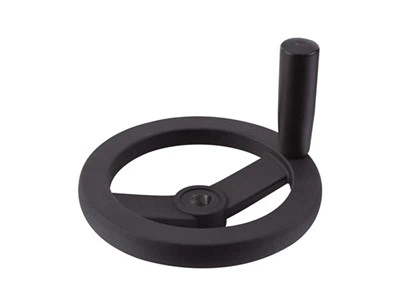
One of the most common types is the Two - spoke Handwheels. These handwheels have, as the name suggests, two spokes. They're relatively simple in design but offer a good balance between grip and ease of use.
The two - spoke design provides a large opening in the center, which can be useful for applications where you need to access something through the handwheel. For example, in some machinery, you might need to pass a cable or a rod through the center of the handwheel. The two - spoke design allows for this without getting in the way.
They're also great for applications where you need a quick and easy adjustment. The two spokes give you a good place to grip, and you can turn the handwheel with a relatively small amount of force. This makes them ideal for applications where you need to make frequent adjustments, like in some laboratory equipment.
Solid Handwheels
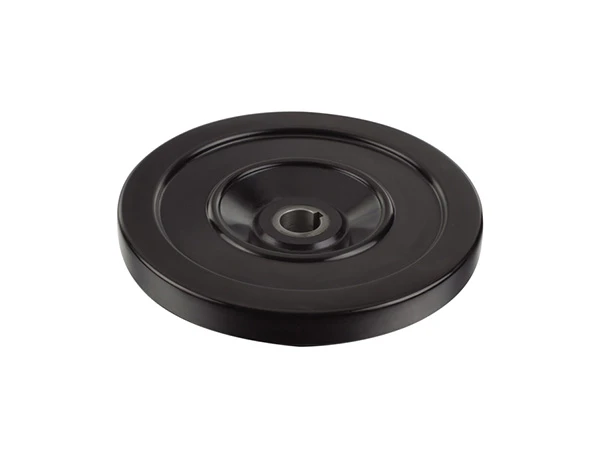
Next up, we have the Solid Handwheels. These handwheels are, well, solid! They don't have any spokes or openings in the center. Instead, they're a single, solid piece of material.
Solid handwheels are known for their durability and strength. They can withstand a lot of wear and tear, making them perfect for heavy - duty applications. For example, in industrial machinery that operates under high pressure or in harsh environments, solid handwheels are often the go - to choice.
They also provide a smooth and continuous surface for gripping. This can be beneficial in applications where you need a firm and comfortable grip, like in some power tools. The solid design also means that there are no small parts that can break or get lost, which can be a big advantage in some settings.
3 Spoke Handwheel
Another popular type is the 3 Spoke Handwheel. The three - spoke design offers a bit more stability compared to the two - spoke handwheels. The additional spoke provides more support and balance, which can be useful in applications where you need to apply a lot of force.
The 3 spoke handwheel is also a good compromise between the two - spoke and solid handwheels. It has some of the advantages of both. Like the two - spoke handwheel, it has an opening in the center, which can be useful for passing things through. And like the solid handwheel, it provides a relatively stable and secure grip.
These handwheels are often used in applications where you need a combination of control and strength. For example, in some automotive applications, 3 spoke handwheels are used for adjusting various settings, like the seat position or the mirror angle.
Other Types
Apart from these main types, there are also other variations of internal handwheels. Some handwheels have a knurled surface, which provides an even better grip. The knurling can be in different patterns, like straight, diamond, or cross - hatched, depending on the application.
There are also handwheels with different materials. For example, some are made of plastic, which is lightweight and inexpensive. Plastic handwheels are great for applications where weight is a concern, like in some consumer electronics. On the other hand, metal handwheels, such as those made of aluminum or steel, are more durable and can handle higher loads.

Some handwheels also come with additional features, like a locking mechanism. This can be useful in applications where you need to keep the handwheel in a specific position. For example, in some medical equipment, you might need to lock the handwheel to prevent accidental adjustments.
Choosing the Right Type
So, how do you choose the right type of internal handwheel for your application? Well, it depends on a few factors.
First, consider the amount of force you need to apply. If you need to apply a lot of force, a solid handwheel or a 3 spoke handwheel might be a better choice. If you only need to make small adjustments with a light touch, a two - spoke handwheel could be sufficient.
Next, think about the environment in which the handwheel will be used. If it's a harsh environment with a lot of dust, moisture, or high temperatures, a durable material like metal and a solid design might be necessary. If it's a clean and controlled environment, a plastic handwheel could work just fine.
Also, consider any special requirements of your application. Do you need to pass something through the center of the handwheel? Do you need a locking mechanism? These factors will also influence your choice.
Why Choose Our Internal Handwheels
As a supplier of internal handwheels, we offer a wide range of options to meet your needs. We have all the types I've mentioned above, and we can also customize handwheels according to your specific requirements.
Our handwheels are made with high - quality materials and strict manufacturing processes. This ensures that they're reliable, durable, and perform well in various applications. Whether you're in the industrial, medical, or consumer electronics field, we have the right handwheel for you.
If you're looking for internal handwheels for your project, don't hesitate to reach out. We're here to help you choose the best handwheel for your needs and provide you with top - notch service. Contact us today to start the procurement process and let's discuss how we can work together to meet your requirements.
References
- Machinery Handbook: A comprehensive guide to mechanical engineering and manufacturing, which provides detailed information on different types of handwheels and their applications.
- Industrial Design Manual: This manual offers insights into the design and selection of components for industrial equipment, including handwheels.
- Automotive Engineering Textbooks: These textbooks cover the use of handwheels in automotive applications and the requirements for their performance and durability.