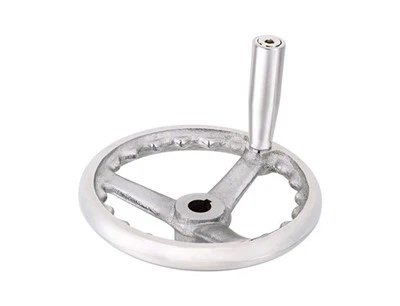
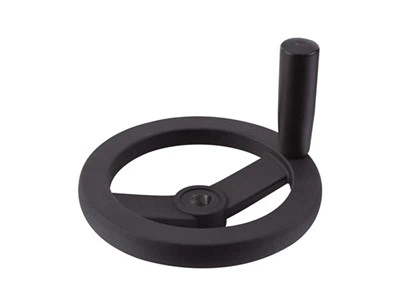
Handwheels are widely used in CNC operations and come in various types based on material and application. When selecting a handwheel, it is important to consider not only the material and how it feels to use but also the specific application to ensure the right choice is made.
Handwheels are available in a variety of materials-such as plastic, aluminum alloy, Bakelite, nylon, and cast iron-with specifications varying accordingly. Examples include:
Small Corrugated Handwheel: Made of Bakelite and adapted from the design of a corrugated six-star knob (80mm diameter); it is lightweight and durable.
Internal Corrugated Handwheel: Made of Bakelite with a glossy finish; it offers effective rust resistance and a long service life.
Solid Handwheel: Injection-molded from nylon with a matte finish; features a sealed center bore.
Rear-Corrugated Handwheel: Made of Bakelite with chrome-plated or black-oxide treated metal parts; offers strong rust resistance but features a fixed (non-folding) handle.
Flat Handwheel: Features an aesthetically pleasing, natural design; made of aluminum, offering resistance to high temperatures and machine oil.
Textured (Grid-Pattern) Handwheel: Injection-molded from reinforced nylon; compact and small in diameter, making it suitable for use on small-scale equipment.
Handwheel Applications: Handwheels serve a wide range of purposes across many industries, including packaging machinery, medical equipment, machine tools, printing machinery, boiler components, textile machinery, and petroleum/petrochemical equipment. Their range of applications is truly extensive.