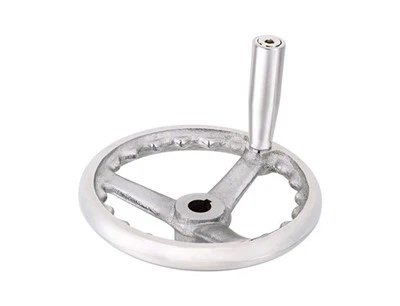
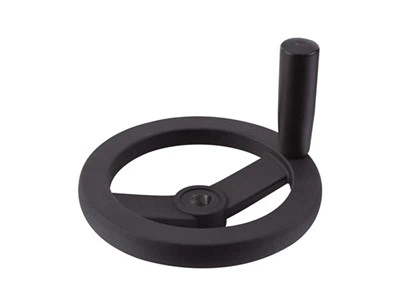
Handwheels, also known as manual pulse generators or photoelectric encoders, are key components of CNC machine tools, such as vertical machining centers, horizontal machining centers, and gantry machining centers. Their unique design not only offers a stylish appearance and ease of movement, but also boasts excellent anti-interference capabilities and a robust load-carrying capacity. Their all-plastic housing is not only durable but also provides excellent insulation and oil-resistance sealing. Furthermore, the handwheel offers three magnification settings (X1, X10, and X100) and a 4-axis magnification switch, providing flexible and versatile operation. Furthermore, their user-friendly design includes a control switch and an emergency stop switch, ensuring easy, safe, and reliable operation. However, handwheels may experience some malfunctions during use. This article will explain how to troubleshoot common problems.

- If the handwheel vibrates on each axis during operation, this is usually due to a problem with the circuit board inside the handwheel housing. In this case, the damaged component needs to be replaced to resolve the issue.
- If the handwheel works intermittently with no apparent pattern, this may be due to excessive resistance inside the handwheel or in the handwheel extension cable. In this case, replacing the cable with a spare one usually resolves the issue.
- If the handwheel is sluggish and experiencing significant pulse loss, this may be due to the pins not being fully inserted. In this case, check to ensure they are properly connected.
- If the handwheel is unusable, this may be due to the signal cable's small connectors (A/B, or X1/X2) being inserted reversed. In this case, reconnect the signal cable correctly.
- If the handwheel is experiencing pulse loss or is unusable, this may be due to incorrect jumper settings on the cable splitter. Typically, the jumpers on both sides should be skipped, leaving the middle position. This means setting the DIP-FIX switches (S1-S6) on the cable splitter to on/off.
- If the handwheel is also experiencing pulse loss or is unusable, this may be due to a broken or loose connection in the signal cable 6FX2002-4AA21-0xx0. At this point, check and repair any broken or loose connections in the signal cable.
- If the handwheel fails to operate, inspection reveals a damaged pulse generator. The only solution is to replace it.