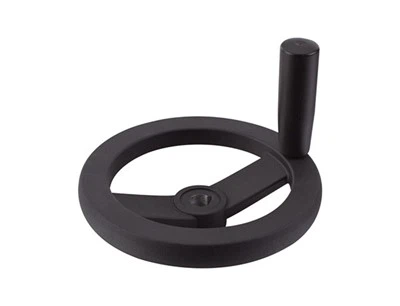
As a supplier of Internal Handwheels, I often encounter inquiries from customers about the suitability of our products for heavy - duty applications. This is a crucial question that deserves in - depth exploration. In this blog, I will delve into various aspects to determine whether internal handwheels are a good fit for heavy - duty scenarios.
Understanding Heavy - Duty Applications
Before we assess the suitability of internal handwheels, we need to define what heavy - duty applications are. Heavy - duty applications typically involve high torque requirements, frequent and intense usage, and exposure to harsh environments. For example, in industrial manufacturing plants, heavy - duty machinery such as large - scale presses, metal - cutting machines, and heavy conveyors often demand components that can withstand significant stress and perform consistently over long periods. In the automotive industry, equipment used for vehicle assembly and maintenance, like large - capacity lifts and engine hoists, also fall into the category of heavy - duty applications.
Features of Internal Handwheels
Internal handwheels have several distinct features that may influence their suitability for heavy - duty applications. Firstly, their design is often compact. This compactness allows them to be installed in tight spaces where larger handwheels may not fit. For instance, in some precision machining centers, space is at a premium, and internal handwheels can be integrated seamlessly into the control systems.
Secondly, internal handwheels usually offer a high level of precision. They are designed to provide accurate and fine - tuned adjustments. This precision is essential in applications where even the slightest deviation can lead to significant errors, such as in the calibration of optical instruments or the adjustment of robotic arms in a manufacturing line.
However, these features also have their limitations when it comes to heavy - duty applications. The compact design may mean that the handwheel has a smaller diameter, which in turn can limit the amount of torque that can be applied. In heavy - duty scenarios where high torque is required to operate large - scale machinery, this could be a drawback.
Material and Construction
The material and construction of internal handwheels play a vital role in determining their suitability for heavy - duty applications. High - quality internal handwheels are often made from durable materials such as stainless steel, aluminum alloys, or high - strength plastics. Stainless steel handwheels offer excellent corrosion resistance and high strength, making them suitable for applications in harsh environments, such as chemical processing plants or outdoor machinery. Aluminum alloy handwheels are lightweight yet strong, which can be beneficial in applications where weight is a concern, such as in aerospace equipment.
The construction of the handwheel also affects its performance. A well - constructed internal handwheel will have a robust bearing system that can handle the load and friction generated during operation. For heavy - duty applications, a handwheel with a high - quality ball bearing or roller bearing can reduce wear and tear and ensure smooth operation even under high stress.
Torque and Load Capacity
One of the most critical factors in heavy - duty applications is the torque and load capacity of the handwheel. Torque is the rotational force required to turn the handwheel, and load capacity refers to the maximum weight or force that the handwheel can withstand without failure.
In heavy - duty applications, the torque requirements can be extremely high. For example, in a large - scale winch system used for lifting heavy loads, the handwheel needs to be able to generate enough torque to overcome the weight of the load. Internal handwheels, due to their compact size, may have a lower torque - generating capacity compared to larger external handwheels. However, some advanced internal handwheels are designed with gear systems or other mechanisms to increase the torque output.
Load capacity is also a concern. In applications where the handwheel is subject to continuous pressure or shock loads, such as in a heavy - duty stamping press, the handwheel must be able to withstand these forces without deforming or breaking. Our internal handwheels are engineered to have a high load - bearing capacity, but it is essential to match the handwheel's specifications with the requirements of the specific heavy - duty application.
Comparison with Other Types of Handwheels
To better understand the suitability of internal handwheels for heavy - duty applications, it is useful to compare them with other types of handwheels. Indicator Handwheels are often used for applications where visual indication of the adjustment is required. They are typically more focused on providing clear feedback rather than high - torque operation. While they may not be the first choice for heavy - duty applications, they can be used in conjunction with other components in a control system.
Two - spoke Handwheels are known for their simplicity and ease of use. They are often used in applications where a quick and rough adjustment is needed. In heavy - duty applications, two - spoke handwheels may be more suitable for applications with lower torque requirements or where the adjustment does not need to be highly precise.
Internal handwheels, on the other hand, offer a balance between precision and compactness. They can be a good option for heavy - duty applications where space is limited and some level of precision is required.
Case Studies
Let's look at some real - world case studies to illustrate the suitability of internal handwheels in heavy - duty applications. In a small - scale metal - working shop, an internal handwheel was used to control the feed rate of a lathe. The lathe was used to machine large - diameter metal parts, which required a certain level of precision in the feed adjustment. The internal handwheel, with its compact design, was easily installed on the control panel of the lathe. Its precision adjustment feature allowed the operator to set the feed rate accurately, resulting in high - quality machined parts.
In another case, in a food processing plant, internal handwheels were used to adjust the tension of conveyor belts. The conveyor belts were used to transport heavy loads of food products continuously. The internal handwheels, made from food - grade stainless steel, were able to withstand the moist and acidic environment of the plant. Their high - quality bearing system ensured smooth operation, even under the continuous load of the conveyor belts.
Conclusion
In conclusion, internal handwheels can be suitable for heavy - duty applications under certain conditions. Their compact design and precision make them a good choice for applications where space is limited and accurate adjustments are required. However, their torque and load - bearing capacity may be a limiting factor in some heavy - duty scenarios.
When considering using internal handwheels for heavy - duty applications, it is essential to carefully evaluate the specific requirements of the application, including torque, load capacity, environmental conditions, and precision needs. Our company offers a wide range of Internal Handwheels with different specifications to meet the diverse needs of heavy - duty applications.
If you are interested in our internal handwheels for your heavy - duty projects, I encourage you to contact us for further discussion. We have a team of experts who can provide you with detailed technical advice and help you select the most suitable handwheel for your specific requirements.


References
- Machinery's Handbook, 31st Edition
- Industrial Handbook of Handwheels and Controls
- Journal of Mechanical Engineering, various issues on handwheel design and applications