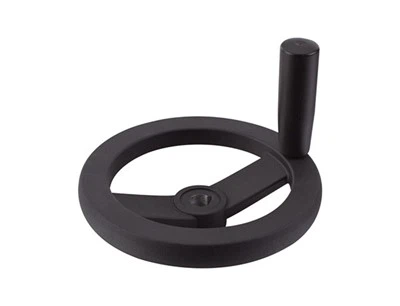
In the dynamic realm of electrical equipment manufacturing, precision, reliability, and user - friendliness are of paramount importance. One component that often goes unnoticed but plays a significant role in achieving these qualities is the handwheel. As a handwheel supplier, I've witnessed firsthand the versatility and value that handwheels bring to electrical equipment manufacturing. In this blog, we'll explore whether handwheels can indeed be used in electrical equipment manufacturing and the benefits they offer.
The Role of Handwheels in Electrical Equipment
To understand the potential of handwheels in electrical equipment manufacturing, we first need to grasp their basic function. Handwheels are mechanical devices that allow users to manually control the movement or adjustment of a mechanism. In electrical equipment, they can serve a variety of purposes.
One of the primary applications is for fine - tuning settings. Electrical equipment often requires precise adjustments of parameters such as voltage, current, or frequency. A handwheel can provide a tactile and intuitive way for technicians or operators to make these adjustments. For example, in a power supply unit, a handwheel can be used to adjust the output voltage within a specific range. The operator can turn the handwheel slowly and precisely, ensuring that the desired voltage level is achieved.
Handwheels are also useful for controlling the position of components within electrical equipment. In a robotic arm used in an automated electrical assembly line, a handwheel can be employed to manually adjust the position of the arm for calibration or maintenance purposes. This allows for easy and accurate repositioning without the need for complex programming or automated controls.
Types of Handwheels Suitable for Electrical Equipment
There are several types of handwheels that are well - suited for electrical equipment manufacturing.
Two - spoke Handwheels
Two - spoke Handwheels are a popular choice due to their simplicity and ease of use. They typically have two spokes that provide a comfortable grip for the user. These handwheels are often used in applications where quick and easy adjustments are required. In a small - scale electrical testing device, a two - spoke handwheel can be used to adjust the sensitivity of a sensor. The operator can simply grip the spokes and turn the handwheel to make the necessary changes.
Indicator Handwheels
Indicator Handwheels are equipped with a scale or indicator that shows the position or value of the adjustment. This is extremely useful in electrical equipment where precise readings are crucial. For instance, in a multi - meter, an indicator handwheel can be used to select different measurement ranges. The scale on the handwheel clearly shows the selected range, allowing the user to make accurate measurements.
Pretty Solid Handwheels
Pretty Solid Handwheels are designed to be robust and durable. They can withstand heavy use and harsh environments, which is essential in electrical equipment manufacturing. In an industrial electrical control panel, a pretty solid handwheel can be used to control the operation of a large - scale motor. The handwheel's solid construction ensures that it can handle the mechanical stress associated with frequent use.
Benefits of Using Handwheels in Electrical Equipment Manufacturing
Precision
As mentioned earlier, handwheels offer a high level of precision in making adjustments. The manual control allows operators to make small, incremental changes, which is often required in electrical equipment. This precision can lead to better performance and more accurate results. For example, in a high - precision electrical filter, a handwheel can be used to adjust the cutoff frequency with great accuracy, ensuring that the filter functions as intended.
User - friendliness
Handwheels are intuitive to use. Unlike complex digital interfaces, which may require extensive training to operate, handwheels can be easily understood and used by operators of all skill levels. This reduces the learning curve and increases the efficiency of the manufacturing process. In a small electrical workshop, even an inexperienced technician can quickly learn to use a handwheel to adjust the settings of a soldering iron temperature controller.
Safety
In some cases, handwheels can enhance safety in electrical equipment. Manual control means that operators have direct physical contact with the adjustment mechanism. This can be beneficial in situations where automated controls may malfunction. For example, in a high - voltage electrical switchgear, a handwheel can be used to manually open or close the switch in case of an emergency, providing an additional layer of safety.
Cost - effectiveness
Compared to some high - tech digital control systems, handwheels are relatively inexpensive. They require less complex electronics and programming, which can result in significant cost savings for electrical equipment manufacturers. This makes them an attractive option, especially for small and medium - sized enterprises.
Challenges and Considerations
While handwheels offer many benefits, there are also some challenges and considerations when using them in electrical equipment manufacturing.
Compatibility
Handwheels need to be compatible with the electrical equipment they are used in. This includes ensuring that the mechanical connection between the handwheel and the equipment is proper and that the electrical signals generated by the adjustment are correctly integrated into the equipment's control system. For example, in a computer - controlled electrical machine, the handwheel's output signals need to be compatible with the machine's software.
Environmental factors
Electrical equipment can be used in a variety of environments, and handwheels need to be able to withstand these conditions. In a humid or dusty environment, the handwheel may need to be sealed to prevent damage. In a high - temperature environment, the materials used in the handwheel need to be heat - resistant.
Maintenance
Like any mechanical component, handwheels require regular maintenance. This includes lubrication of moving parts, inspection for wear and tear, and replacement of damaged components. Failure to perform proper maintenance can lead to reduced performance and even equipment failure.


Conclusion
In conclusion, handwheels can definitely be used in electrical equipment manufacturing. They offer a range of benefits, including precision, user - friendliness, safety, and cost - effectiveness. With the right selection of handwheel types and proper consideration of compatibility, environmental factors, and maintenance, handwheels can enhance the performance and functionality of electrical equipment.
If you're an electrical equipment manufacturer looking to incorporate handwheels into your products or improve the existing ones, I'd be more than happy to discuss your specific needs. Whether you require Two - spoke Handwheels, Indicator Handwheels, or Pretty Solid Handwheels, I can provide you with high - quality solutions. Let's start a conversation about how handwheels can take your electrical equipment to the next level.
References
- "Mechanical Design Handbook for Electrical Engineers", John Wiley & Sons
- "Electrical Equipment Manufacturing Best Practices", McGraw - Hill Education
- Industry reports on electrical component usage in manufacturing