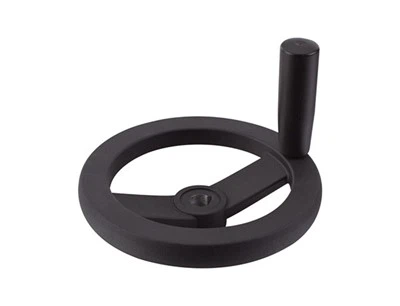
As a supplier of Straight Crank Handles, I often encounter inquiries about whether these handles have a locking mechanism. This question is not only crucial for end - users who rely on the functionality and safety of the equipment but also for those in the procurement process who need to make informed decisions. In this blog, I'll delve into the topic of whether straight crank handles have a locking mechanism, exploring the different scenarios, types, and benefits.


General Understanding of Straight Crank Handles
Straight Crank Handles are widely used in various industrial, mechanical, and even household applications. Their simple yet effective design allows for easy operation, providing a convenient way to turn, adjust, or lock different components. You can find more details about our Straight Crank Handles on our website.
These handles typically consist of a straight shaft with a grip at one end. The shaft is attached to the equipment, and by applying force to the grip, users can rotate or move the connected part. The design is straightforward, which makes them cost - effective and easy to install.
Locking Mechanisms in Straight Crank Handles
The answer to the question “Do straight crank handles have a locking mechanism?” is not a simple yes or no. It depends on the specific design and intended use of the handle.
Handles without Locking Mechanisms
Many basic straight crank handles are designed without a built - in locking mechanism. These are often used in applications where continuous adjustment or free rotation is required. For example, in some manual adjustment systems of machinery, such as adjusting the height of a small workbench or the angle of a light fixture, a non - locking straight crank handle allows users to make quick and easy adjustments without the need for a lock. The simplicity of these handles makes them ideal for situations where rapid changes are frequent.
Handles with Locking Mechanisms
On the other hand, there are straight crank handles that come equipped with locking mechanisms. These are designed for applications where it is necessary to secure the handle in a specific position. For instance, in industrial machinery where precise settings need to be maintained, a locking straight crank handle can prevent accidental movement that could lead to equipment malfunction or safety hazards.
There are different types of locking mechanisms used in straight crank handles:
- Friction - based Locking: This type of mechanism uses friction to hold the handle in place. A simple example is a handle with a screw that can be tightened against the shaft. When the screw is tightened, it creates friction between the screw and the shaft, preventing the handle from rotating. This is a relatively inexpensive and common locking method.
- Ratchet - based Locking: Ratchet - based locking mechanisms provide incremental locking positions. The handle can be rotated in one direction and then locked at specific intervals. This is useful in applications where precise adjustments are required, such as in some measuring or positioning devices.
Comparing with Other Types of Crank Handles
To better understand the role of locking mechanisms in straight crank handles, it's helpful to compare them with other types of crank handles, such as Ball Crank Handles and Revolving Ball Crank Handles.
Ball crank handles typically have a ball - shaped grip, which provides a more comfortable and ergonomic way to hold and operate the handle. Some ball crank handles also come with locking mechanisms, but their design may be different from straight crank handles. The ball shape allows for a different range of motion and grip, which can be beneficial in certain applications.
Revolving ball crank handles, as the name suggests, have a revolving feature. They can rotate around an axis, providing even more flexibility in operation. Similar to straight and ball crank handles, they may or may not have a locking mechanism depending on the specific design.
Benefits of Using Straight Crank Handles with Locking Mechanisms
- Safety: In industrial settings, safety is of utmost importance. A locking straight crank handle can prevent accidental movement of machinery, reducing the risk of injury to operators. For example, in a heavy - duty press machine, a locked handle ensures that the machine remains in a safe position during operation.
- Precision: Locking mechanisms allow for precise positioning and adjustment. In applications such as CNC machines or optical instruments, where accuracy is crucial, a locking straight crank handle can maintain the desired settings, ensuring high - quality output.
- Stability: When a handle is locked in place, it provides stability to the connected equipment. This is especially important in applications where vibrations or external forces could cause the handle to move, such as in automotive or aerospace components.
Applications of Straight Crank Handles with Locking Mechanisms
- Industrial Automation: In automated production lines, straight crank handles with locking mechanisms are used to adjust and secure various components. They can be found in conveyor systems, robotic arms, and control panels, ensuring that the equipment operates smoothly and accurately.
- Medical Equipment: In medical devices, precision and safety are critical. Locking straight crank handles are used in equipment such as surgical tables and diagnostic machines to adjust and lock the position of different parts, ensuring the comfort and safety of patients.
- Aerospace and Defense: In aerospace and defense applications, where reliability and precision are essential, straight crank handles with locking mechanisms are used in aircraft control systems, missile guidance systems, and other critical components.
Considerations When Choosing Straight Crank Handles
When choosing straight crank handles, whether with or without a locking mechanism, several factors should be considered:
- Application Requirements: First and foremost, understand the specific requirements of your application. If you need to make frequent adjustments, a non - locking handle may be more suitable. However, if precision and stability are crucial, a locking handle is the better choice.
- Load Capacity: Consider the amount of force that will be applied to the handle. If the handle will be subjected to high loads, a handle with a robust locking mechanism and high - strength materials is necessary.
- Environmental Conditions: The environment in which the handle will be used also matters. For example, in a corrosive environment, a handle made of corrosion - resistant materials should be selected.
Conclusion
In conclusion, straight crank handles may or may not have a locking mechanism, depending on the design and application. As a supplier of Straight Crank Handles, we offer a wide range of options to meet different customer needs. Whether you need a simple non - locking handle for quick adjustments or a handle with a sophisticated locking mechanism for high - precision applications, we have the right solution for you.
If you are interested in our Straight Crank Handles or have any questions about the locking mechanisms or other features, please feel free to contact us for procurement and further discussion. We are committed to providing high - quality products and excellent customer service.
References
- Industrial Machinery Handbook
- Engineering Design Principles for Crank Handles
- Safety Standards in Industrial Equipment