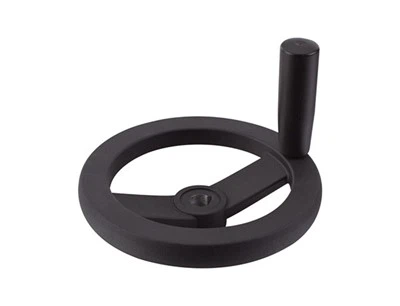
In the world of industrial and household hardware, choosing the right type of knob can significantly impact both functionality and aesthetics. Among the various options available, lobe knobs and handle knobs are two popular choices that serve different purposes and come with their own unique sets of features. As a supplier of lobe knobs, I am well - versed in the characteristics of these products and can offer a detailed comparison between lobe knobs and handle knobs.
Design and Aesthetics
Lobe knobs are known for their distinctive, rounded, and often three - lobed shape. This design gives them a unique and somewhat organic look. The rounded lobes provide a comfortable grip, allowing users to easily turn or adjust the knob. The shape is not only functional but also adds a touch of style to the equipment or furniture they are attached to. Lobe knobs can be found in a variety of materials, including plastic, metal, and wood, each offering a different aesthetic appeal. For example, plastic lobe knobs can be made in bright, eye - catching colors, while metal ones exude a more industrial and durable look.
On the other hand, handle knobs typically feature a long, straight or curved handle. This design is more utilitarian in appearance, focusing on providing a large surface area for gripping. Handle knobs are commonly used in applications where a greater amount of torque is required, such as on heavy - duty machinery or large cabinets. Their design is often more straightforward and less decorative compared to lobe knobs, but they can still be customized with different finishes and materials to match the overall style of the equipment.
Grip and Ergonomics
One of the key factors in choosing a knob is the quality of the grip it provides. Lobe knobs excel in this area due to their unique shape. The rounded lobes fit naturally into the palm of the hand, allowing for a secure and comfortable grip. This makes them ideal for applications where frequent adjustments are needed, such as on laboratory equipment or small appliances. The ergonomic design reduces hand fatigue, even during extended use.
Handle knobs, while also providing a good grip, have a different approach. The long handle allows users to apply force from a greater distance, which can be advantageous when more torque is required. However, the shape of the handle may not be as comfortable for all hand sizes and gripping styles. Some users may find that the handle is too large or too small for their hands, leading to a less secure grip or increased hand fatigue over time.
Functionality and Application
Lobe knobs are commonly used in applications where precision adjustment is necessary. Their design allows for fine - tuned control, making them suitable for settings such as scientific instruments, audio equipment, and light - duty machinery. For example, in a microscope, a lobe knob can be used to precisely adjust the focus, providing accurate and smooth movement.
Handle knobs, on the other hand, are better suited for applications that require a large amount of force or torque. They are often found on heavy - duty machinery, large doors, and industrial cabinets. For instance, on a large industrial oven door, a handle knob can be used to easily open and close the door, providing the necessary leverage to overcome the weight and resistance of the door.
Durability and Material
The durability of a knob depends largely on the material it is made from. Lobe knobs can be manufactured from a wide range of materials, each with its own level of durability. Plastic lobe knobs are lightweight and cost - effective, but they may not be as durable as metal or wood knobs. Metal lobe knobs, such as those made from stainless steel or aluminum, are highly durable and resistant to corrosion. They can withstand harsh environments and heavy use, making them suitable for industrial applications.
Handle knobs are also available in a variety of materials. Metal handle knobs are commonly used in heavy - duty applications due to their strength and durability. Wood handle knobs, on the other hand, can add a touch of warmth and elegance to furniture but may require more maintenance to prevent damage.
Cost
Cost is an important consideration when choosing between lobe knobs and handle knobs. Generally, plastic lobe knobs are the most affordable option, making them a popular choice for budget - conscious projects. Metal lobe knobs, especially those made from high - quality materials, can be more expensive but offer greater durability.
Handle knobs, particularly those made for heavy - duty applications, tend to be more expensive due to the larger amount of material used and the more complex manufacturing process. However, the cost can vary depending on the material, size, and design of the knob.


Customization
Both lobe knobs and handle knobs can be customized to meet specific requirements. Lobe knobs can be customized in terms of size, color, and material. For example, a customer may request a custom - colored plastic lobe knob to match the color scheme of their equipment. Some suppliers also offer the option to engrave logos or text on the lobe knobs, adding a personalized touch.
Handle knobs can also be customized, with options for different handle lengths, shapes, and finishes. For heavy - duty applications, custom - made handle knobs can be designed to meet specific torque requirements.
Comparison with Related Products
When comparing lobe knobs and handle knobs, it's also useful to look at other related products in the market. For example, Knurled Thread Clamping Knob is designed specifically for clamping applications. It features a knurled surface for a better grip and a threaded design for secure fastening. While it shares some similarities with lobe and handle knobs in terms of the need for a good grip, its primary function is different.
Metal Star Knob is another type of knob that offers a unique design. The star - shaped design provides multiple points of contact for a secure grip, similar to the lobe knob's multi - lobe design. However, the metal star knob is often used in applications where a more decorative yet functional knob is required.
Black Knurled Knobs are known for their knurled surface, which enhances the grip. They are available in various shapes and sizes, and the black finish can add a sleek and modern look to the equipment.
Conclusion
In conclusion, both lobe knobs and handle knobs have their own advantages and are suitable for different applications. Lobe knobs are ideal for applications that require precision adjustment, a comfortable grip, and a touch of style. They are commonly used in light - duty and precision - based equipment. Handle knobs, on the other hand, are better suited for applications that require a large amount of torque and a more utilitarian design. They are commonly found on heavy - duty machinery and large cabinets.
As a supplier of lobe knobs, I understand the importance of choosing the right knob for your specific needs. Whether you are looking for a knob for a small laboratory instrument or a large industrial machine, I can provide you with high - quality lobe knobs that meet your requirements. If you are interested in purchasing lobe knobs or would like to discuss your specific needs, please feel free to contact me for further details and to start a procurement negotiation.
References
- "Industrial Hardware Handbook", various authors, published by an industrial hardware association.
- "Ergonomics in Product Design", a research paper on the importance of ergonomic design in hardware products.