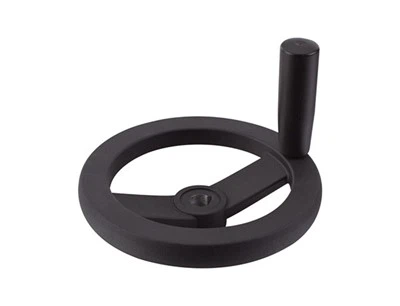
Hey there! I'm a supplier of steel control knobs, and today I wanna chat about how these knobs interact with other components in equipment. Steel control knobs might seem like small parts, but they play a big role in the overall functionality of all sorts of machines.
First off, let's talk about the basic function of steel control knobs. They're mainly used for adjusting, controlling, and setting various parameters in equipment. Whether it's a simple home appliance or a high - tech industrial machine, these knobs give users a way to make precise changes.
One of the most common interactions is with shafts. Steel control knobs are usually mounted on shafts. The shaft acts as a connection point between the knob and the internal mechanism of the equipment. When you turn the knob, the shaft rotates, transferring the motion to other parts. For example, in a mixer, the steel control knob on the front panel is connected to a shaft. As you turn the knob, the shaft rotates, and this rotation is transmitted to the motor - driven blades inside the mixer, adjusting the speed of the blades.
Another important interaction is with switches. In some equipment, steel control knobs are used to activate or deactivate switches. For instance, in an old - fashioned radio, you might have a steel knob that you turn to turn the radio on or off. The knob is connected to a switch mechanism. When you turn the knob in one direction, it closes the circuit, allowing electricity to flow and powering on the radio. When you turn it back, it opens the circuit, turning the radio off.
Now, let's look at how steel control knobs interact with sensors. In modern, smart equipment, sensors are everywhere. Steel control knobs can be used to adjust the sensitivity of sensors. Take a security camera as an example. There might be a steel control knob on the camera housing. By turning this knob, you can adjust the sensitivity of the motion sensor in the camera. A higher setting on the knob makes the sensor more sensitive, so it can detect even the slightest movement.
When it comes to different types of steel control knobs, they have their own unique interactions. For example, Knurled Clamping Knobs are designed to provide a firm grip. They're often used in equipment where you need to tightly hold or secure something. In a vise, a knurled clamping knob can be turned to tighten or loosen the jaws of the vise. The knob is connected to a screw mechanism. As you turn the knob clockwise, the screw moves, pulling the jaws together and clamping an object firmly.
Deflection Knobs are used to control the direction or deflection of something. In a laser - guiding system, a deflection knob can be used to adjust the angle of the laser beam. The knob is connected to a mirror or prism mechanism. When you turn the knob, it changes the position of the mirror or prism, redirecting the laser beam.
Three - arm Knobs are great for applications where you need to make quick and easy adjustments. They provide a larger surface area for your hand to grip. In a microscope, a three - arm knob can be used to adjust the focus. The knob is connected to a focusing mechanism inside the microscope. By turning the three - arm knob, you can move the objective lens up or down, bringing the specimen into sharp focus.
In industrial equipment, steel control knobs also interact with gears. Gears are used to transfer power and change the speed or direction of motion. A steel control knob can be used to select different gear ratios. In a transmission system of a vehicle, for example, a control knob can be used to shift between different gears. The knob is connected to a gear - shifting mechanism. When you turn the knob, it engages or disengages different gears, changing the speed and torque of the vehicle.
In addition to mechanical interactions, steel control knobs can also have electrical interactions. In electronic devices, they can be used to adjust electrical parameters such as voltage or resistance. In a power supply unit, a steel control knob can be used to adjust the output voltage. The knob is connected to a potentiometer, which is a variable resistor. As you turn the knob, the resistance of the potentiometer changes, which in turn changes the output voltage of the power supply.


When designing equipment, engineers need to carefully consider how steel control knobs interact with other components. They need to ensure that the knob's movement is smooth and that it can accurately control the other parts. The materials used in the knob and the connected components also matter. Steel is a great choice for control knobs because it's durable, strong, and can withstand a lot of wear and tear.
Moreover, the ergonomics of steel control knobs are crucial. They need to be easy to grip and turn, especially for users who will be operating the equipment for long periods. A well - designed steel control knob can improve the user experience and make the equipment more user - friendly.
If you're in the market for high - quality steel control knobs, I'm here to help. I've been in the business for a while, and I know all about these knobs and how they interact with other components. Whether you're working on a small DIY project or a large - scale industrial production, I can provide you with the right steel control knobs for your needs. So, if you're interested in purchasing steel control knobs or have any questions about their applications, feel free to reach out. Let's have a chat and see how we can work together to make your equipment function at its best.
References
- "Mechanical Design Handbook"
- "Electronics for Dummies"
- Industry - specific technical manuals on equipment design and operation