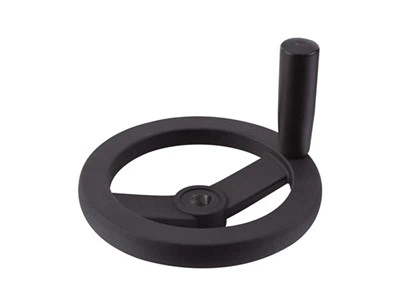
Hey there! As a supplier of Two-spoke Handwheels, I often get asked about the load - bearing capacity of these nifty little tools. So, I thought I'd sit down and write this blog to share some insights on this topic.
First off, let's talk about what two - spoke handwheels are. They're a type of handwheel that typically has two spokes connecting the outer ring to the center hub. You can check out our range of Two-spoke Handwheels. These handwheels are used in a variety of applications, from industrial machinery to small DIY projects.


The load - bearing capacity of two - spoke handwheels depends on several factors. One of the most important factors is the material they're made from. Common materials for handwheels include plastic, metal (like aluminum or steel), and sometimes even wood.
Plastic two - spoke handwheels are lightweight and affordable. They're great for applications where the load is relatively light. For example, if you're using a handwheel to adjust a small valve on a household water system, a plastic handwheel might do the job just fine. However, their load - bearing capacity is limited. Plastic can start to deform or break under heavy loads. Usually, plastic two - spoke handwheels can handle loads in the range of a few pounds to maybe 50 pounds, depending on the quality and design of the plastic.
On the other hand, metal handwheels, especially those made of steel, have a much higher load - bearing capacity. Steel is strong and durable. It can withstand heavy forces without deforming easily. Steel two - spoke handwheels are commonly used in industrial settings, such as on large machinery for adjusting settings or controlling movements. They can handle loads ranging from several hundred pounds to even thousands of pounds in some cases. Aluminum handwheels are also a popular choice. They're lighter than steel but still offer a decent load - bearing capacity. They're often used in applications where weight is a concern, like in aerospace or automotive industries. Aluminum two - spoke handwheels can typically handle loads from around 50 pounds to a few hundred pounds.
Another factor that affects the load - bearing capacity is the design of the handwheel. The thickness of the spokes, the size of the hub, and the diameter of the outer ring all play a role. A handwheel with thicker spokes and a larger hub can generally support more weight. For instance, a handwheel with thick, solid spokes will distribute the load more evenly across the structure, reducing the stress on any one part of the handwheel.
The way the handwheel is mounted also matters. If it's properly secured to a stable base, it can handle more load. A loose or poorly mounted handwheel will not be able to transfer the load effectively and may fail under relatively light loads.
Now, let's compare two - spoke handwheels with other types of handwheels. We also offer Pretty Solid Handwheels and Solid Handwheels. Solid handwheels, as the name suggests, have a solid structure without any spokes. They usually have a higher load - bearing capacity compared to two - spoke handwheels because there are no weak points like the spaces between the spokes. However, they're also heavier and more expensive. Pretty solid handwheels are a bit of a middle - ground. They offer a good balance between load - bearing capacity and weight, and they're often more affordable than solid handwheels.
In some applications, you might need to calculate the exact load - bearing capacity. This can be a complex process that involves engineering calculations. You need to consider the material properties, the design of the handwheel, and the expected load conditions. If you're not an engineer, it's a good idea to consult with a professional or refer to the manufacturer's specifications.
When choosing a two - spoke handwheel for your project, you need to think about the maximum load it will need to handle. Make sure to choose a handwheel with a load - bearing capacity that exceeds the expected load to ensure safety and longevity.
If you're in the market for two - spoke handwheels or any other type of handwheels, we're here to help. We've got a wide range of options to suit different needs and budgets. Whether you're a small business owner looking for handwheels for your machinery or a DIY enthusiast working on a home project, we can provide you with the right products.
So, if you're interested in learning more about our handwheels or want to discuss your specific requirements, don't hesitate to reach out. We're always happy to have a chat and help you find the perfect handwheel for your application.
References:
- General knowledge of handwheel engineering and manufacturing
- Industry standards and guidelines for handwheel design and use