The design of clamping knobs is a remarkable feat of engineering, blending functionality and user - friendliness. To understand the origin of the clamping knob design, we need to delve into the historical context of manufacturing and engineering needs.
In the early days of industrialization, workers faced challenges when it came to securing parts during various processes. In machining operations, for example, there was a need to quickly and firmly hold workpieces in place. Manual methods were often slow and unreliable, as they relied on simple hand - tools like wrenches, which required a significant amount of effort and time to tighten and loosen.
The concept of a clamping knob was born out of the desire to improve efficiency and precision. The first clamping knobs were likely simple, utilitarian devices. They were designed to be turned by hand, which eliminated the need for additional tools. This was a game - changer in factories where speed was of the essence. Workers could immediately adjust the clamping force without having to search for or use complex tool sets.
As technology advanced, the designs of clamping knobs became more sophisticated. Different shapes and forms emerged to address specific needs. Take, for instance, the Lobe Knobs. The unique lobed shape of these knobs provides an ergonomic grip. When workers need to apply torque, the lobes fit naturally between the fingers, allowing for a more efficient transfer of force. This design is especially useful in applications where a quick and easy adjustment of the clamping mechanism is required, such as in small - scale assembly work.
Another interesting development in clamping knob design is the Knurled Thread Clamping Knob. The knurling on the surface of these knobs serves a dual purpose. Firstly, it enhances the grip, even when the user's hands are wet or oily. This is crucial in industrial environments where cleanliness is often compromised. Secondly, the knurled pattern can also add a certain aesthetic appeal to the knob. Functionally, the threaded part of the knob allows for precise adjustment of the clamping force, making it suitable for applications where fine - tuning is necessary, like in laboratory equipment or high - precision machining.
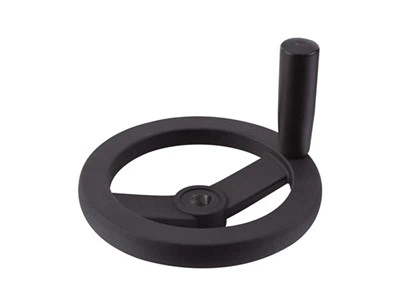
The Three - arm Knobs are yet another example of an innovative clamping knob design. The three - arm structure provides a large surface area for the user to grasp. This is extremely beneficial when a large amount of torque needs to be applied. The arms distribute the force evenly, reducing the risk of user fatigue. They are commonly used in heavy - duty applications, such as in large - scale manufacturing equipment where robust clamping is essential.
Over time, materials used in clamping knob production have also evolved. Initially, simple metals like steel and brass were used. These materials provided durability, but they could be heavy and prone to corrosion. With the advent of new materials such as plastics and composites, clamping knobs became lighter and more resistant to environmental factors. Plastic knobs, for example, are cost - effective and can be molded into complex shapes easily. Composites, on the other hand, offer a combination of strength and lightness, making them ideal for high - performance applications.
The origin of clamping knob design is also influenced by the principles of human - centered design. Designers have always aimed to create knobs that are easy to use, even for workers who may have limited strength or dexterity. This has led to the development of knobs with larger diameters, softer grips, and intuitive shapes. For example, some clamping knobs are designed to be operated with one hand, which is especially useful in situations where the other hand needs to be used for holding or positioning the workpiece.
In addition to industrial applications, clamping knobs have also found their way into other fields. In the medical industry, for instance, they are used in equipment where the secure positioning of components is crucial. In the furniture industry, clamping knobs are used for assembling and adjusting various parts. This wide range of applications has further driven the innovation in clamping knob design.
As a clamping knob supplier, we are at the forefront of this design evolution. We understand the diverse needs of our customers across different industries. Whether it's a small - scale workshop looking for a simple and cost - effective clamping solution or a large - scale manufacturing plant in need of high - precision and heavy - duty knobs, we have the expertise and the product range to meet their requirements.
We source only the highest - quality materials for our clamping knobs, ensuring that they are durable, reliable, and meet the strictest industry standards. Our team of experienced designers and engineers is constantly working on improving our existing products and developing new ones to stay ahead of the curve.


If you are in the market for clamping knobs, we invite you to reach out to us for a purchase negotiation. We believe that our commitment to quality, innovation, and customer service will make us your ideal partner. We can offer you competitive prices, customized solutions, and prompt delivery. Contact us today to discuss how we can meet your specific clamping knob needs and take your operations to the next level.
References
- "Engineering Design Handbook: Industrial Design and Human Factors". Department of the Army, United States.
- "Materials Science and Engineering: An Introduction". William D. Callister Jr. and David G. Rethwisch.