Hey there! As a handwheel supplier, I've always been super curious about where these nifty little tools came from. So, I've done some digging, and I'm excited to share what I've found with you.
Let's start at the very beginning. The concept of a handwheel is ancient, dating back thousands of years. In the early days, humans were constantly looking for ways to make their lives easier. They needed to move heavy objects, lift things up, and control various mechanisms. That's where the idea of a handwheel first emerged.
One of the earliest known uses of handwheels was in ancient water - lifting devices. In places like ancient Egypt and Mesopotamia, people used simple hand - operated wheels to draw water from wells. These early handwheels were usually made of wood, which was readily available and easy to work with. They were attached to a rope or a chain that went down into the well. By turning the handwheel, the rope would wind around it, pulling the bucket of water up to the surface.
As time went on, the use of handwheels spread to other areas. In the Middle Ages, handwheels became an important part of machinery in mills and factories. For example, in a windmill, a handwheel could be used to adjust the sails or control the flow of grain. In a textile factory, handwheels were used to operate looms, allowing workers to change the pattern and speed of the weaving process.
The Industrial Revolution was a game - changer for handwheels. With the development of steam power and later electricity, factories became more complex, and the demand for precise control increased. Handwheels were used in all sorts of machinery, from lathes and milling machines to printing presses. During this time, the materials used to make handwheels also started to change. Metal, especially cast iron, became a popular choice because it was strong and durable.
Now, let's talk about the different types of handwheels that are available today. There are so many options out there, each with its own unique features and uses.
One type is the Pretty Solid Handwheels. These handwheels are known for their robustness. They're often used in heavy - duty applications where a lot of force is required. Whether it's in a large manufacturing plant or a construction site, these handwheels can handle the pressure.


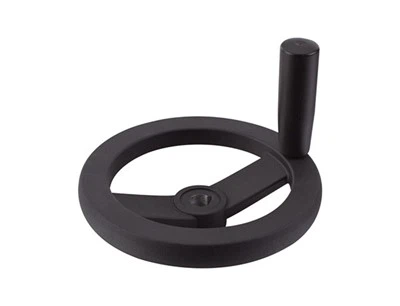
Another popular type is the Two - spoke Handwheels. These handwheels are designed for applications where you need a quick and easy grip. The two - spoke design allows for a more ergonomic hold, reducing fatigue when you're turning the wheel for long periods. They're commonly used in smaller machinery or equipment where precision is key.
Then, there are the Aluminum Alloy Handwheel. Aluminum alloy is a lightweight yet strong material, making these handwheels perfect for applications where weight is a concern. They're often used in aerospace, automotive, and electronics industries, where every ounce counts.
As a handwheel supplier, I've seen firsthand how these different types of handwheels are used in various industries. We work with customers from all over the world, providing them with high - quality handwheels that meet their specific needs. Whether it's a custom - designed handwheel for a unique piece of machinery or a standard off - the - shelf model, we've got you covered.
If you're in the market for handwheels, we'd love to have a chat with you. We can help you figure out which type of handwheel is best for your application, and we'll make sure you get the best product at a great price. Our team of experts is always on hand to answer any questions you might have and provide you with all the information you need.
In conclusion, the origin of the handwheel is a long and fascinating story. From its humble beginnings in ancient water - lifting devices to its widespread use in modern industries, the handwheel has come a long way. And as technology continues to evolve, I'm sure we'll see even more innovative uses for handwheels in the future.
So, if you're interested in learning more or if you're ready to start your handwheel procurement, don't hesitate to reach out. We're here to make your handwheel buying experience as smooth and hassle - free as possible.
References
- "A History of Mechanical Engineering" by Henry Petroski
- "Industrial Revolution: Technology and Society" by Patrick K. O'Brien