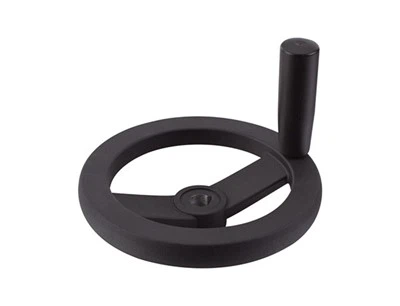
What is the vibration resistance of ball crank handles?
As a supplier of ball crank handles, I've had numerous in - depth discussions with customers about the performance of these essential components. One question that frequently arises is about the vibration resistance of ball crank handles. In this blog post, I'll dive deep into this topic, exploring what vibration resistance means, why it matters, and how our ball crank handles measure up.
Understanding Vibration Resistance
Vibration resistance refers to the ability of a component to withstand the effects of vibrations without significant degradation in performance or damage. In industrial and mechanical applications, vibrations are a common occurrence. They can be caused by various factors, such as the operation of machinery, the movement of vehicles, or even external environmental factors.
When a ball crank handle is exposed to vibrations, several things can happen. If it lacks proper vibration resistance, the handle may loosen over time, leading to a loss of torque and a decrease in the efficiency of the equipment it is used on. In more severe cases, excessive vibrations can cause the handle to break or detach completely, posing a safety risk to operators and potentially damaging the machinery.
Why Vibration Resistance Matters
The importance of vibration resistance in ball crank handles cannot be overstated. In industrial settings, reliability is key. A single malfunctioning component can disrupt an entire production line, leading to costly downtime and lost productivity.
For example, in the automotive manufacturing industry, ball crank handles are used in various assembly operations. If these handles are not vibration - resistant, they may come loose during the high - speed and high - vibration processes, resulting in inaccurate assembly and potentially defective products. Similarly, in the aerospace industry, where precision and safety are of utmost importance, any failure of a ball crank handle due to poor vibration resistance could have catastrophic consequences.
Factors Affecting Vibration Resistance of Ball Crank Handles
Several factors contribute to the vibration resistance of ball crank handles.
Material Quality: The material used to manufacture the ball crank handle plays a crucial role. High - quality metals, such as stainless steel or aluminum alloys, are often preferred due to their strength and durability. These materials can better withstand the stresses caused by vibrations compared to lower - quality materials. For instance, stainless steel has excellent corrosion resistance and high tensile strength, which helps it maintain its integrity even under continuous vibration.
Design and Construction: The design of the ball crank handle also impacts its vibration resistance. Handles with a well - engineered locking mechanism are less likely to come loose. For example, some ball crank handles feature a self - locking design that tightens under vibration, ensuring a secure connection. Additionally, the shape and size of the handle can affect its ability to absorb and dissipate vibration energy. A handle with a larger surface area or a more ergonomic design may be better at distributing the forces generated by vibrations.


Installation: Proper installation is essential for maximizing the vibration resistance of ball crank handles. If a handle is not installed correctly, it may be more prone to loosening or damage. This includes ensuring that the handle is tightened to the correct torque specification and that all mounting points are secure.
Our Ball Crank Handles and Vibration Resistance
As a supplier, we take great pride in the quality and performance of our ball crank handles. Our products are designed to offer exceptional vibration resistance, thanks to a combination of high - quality materials and innovative design.
We use only the finest stainless steel and aluminum alloys in the manufacturing process. These materials are carefully selected for their strength, durability, and resistance to corrosion. Our engineers have also developed unique locking mechanisms that ensure a tight and secure fit, even under extreme vibration conditions.
In addition to our standard ball crank handles, we also offer a range of specialized products, including Fold - away Crank Handles, Revolving Ball Crank Handles, and Straight Crank Handles. Each of these products is designed to meet the specific needs of different applications and provides excellent vibration resistance.
Testing and Quality Assurance
To ensure that our ball crank handles meet the highest standards of vibration resistance, we conduct rigorous testing. Our testing facilities are equipped with state - of - the - art vibration testing equipment that can simulate a wide range of vibration conditions.
During testing, the ball crank handles are subjected to continuous vibrations at different frequencies and amplitudes. We monitor the performance of the handles closely, checking for any signs of loosening, damage, or degradation. Only products that pass these strict tests are approved for sale.
Conclusion and Call to Action
In conclusion, the vibration resistance of ball crank handles is a critical factor in their performance and reliability. Our company is committed to providing high - quality ball crank handles that offer exceptional vibration resistance, ensuring the smooth operation of your equipment and the safety of your workforce.
If you're in the market for reliable ball crank handles, we invite you to contact us for a detailed discussion about your specific requirements. Whether you need a standard handle or a customized solution, our team of experts is ready to assist you. We can provide you with samples, technical specifications, and competitive pricing. Let's work together to find the perfect ball crank handle solution for your business.
References
- "Mechanical Design Handbook" by Robert C. Juvinall and Kurt M. Marshek
- "Industrial Vibration Analysis and Testing" by John D. Hansen