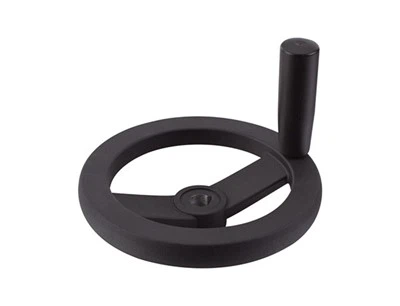
Are straight crank handles suitable for low - speed operations?
As a supplier of Straight Crank Handles, I've had numerous discussions with customers about the suitability of these handles for various operations. In this blog, I'll delve into whether straight crank handles are a good fit for low - speed operations, exploring their features, advantages, and potential limitations.
Understanding Straight Crank Handles
Straight crank handles are a type of manual operating device commonly used in machinery and equipment. They typically consist of a straight bar with a gripping end and a mounting end that can be attached to a shaft or a rotating mechanism. These handles are designed to provide a mechanical advantage, allowing operators to apply force to turn or adjust a component. You can find a wide range of straight crank handles on our website Straight Crank Handles.
Features of Straight Crank Handles
- Simple Design: One of the key features of straight crank handles is their straightforward design. The simplicity makes them easy to install, use, and maintain. There are fewer moving parts compared to more complex handle designs, reducing the risk of mechanical failure.
- High Torque Transmission: Straight crank handles are capable of transmitting high torque. The long lever arm of the handle allows operators to apply a relatively small force at the gripping end to generate a large turning force at the mounting end. This makes them suitable for applications where a significant amount of torque is required to operate a mechanism.
- Versatility: These handles can be used in a variety of industries and applications. They are commonly found in manufacturing equipment, industrial machinery, and even some consumer products. Their versatility stems from their ability to be customized in terms of length, diameter, and material to meet different operational requirements.
Advantages of Using Straight Crank Handles in Low - Speed Operations
- Precise Control: In low - speed operations, precision is often crucial. Straight crank handles allow operators to have fine - tuned control over the movement of a mechanism. The operator can slowly and steadily turn the handle, making small adjustments as needed. This is particularly useful in applications such as lathes, where precise positioning of the cutting tool is required. You can check out our Lathe Crank Handle for more details on this application.
- High Torque at Low Speeds: Low - speed operations often demand high torque to overcome resistance. As mentioned earlier, straight crank handles are excellent at transmitting high torque. Even when the rotational speed is low, the operator can apply sufficient force through the handle to turn the mechanism. For example, in a heavy - duty industrial press, a straight crank handle can be used to apply the necessary force to compress materials at a slow and controlled pace.
- Cost - Effective: Straight crank handles are generally more cost - effective compared to some other types of operating devices. Their simple design means lower manufacturing costs, which can be passed on to the customers. This makes them an attractive option for businesses looking to keep their equipment costs down, especially in low - speed operations where the requirements are not overly complex.
Potential Limitations in Low - Speed Operations
- Limited Reach and Accessibility: In some low - speed operations, the workspace may be restricted. The long lever arm of a straight crank handle can sometimes pose a problem in tight spaces. Operators may find it difficult to maneuver the handle or may even risk hitting other components in the vicinity. In such cases, a Fold - away Crank Handles might be a better alternative as they can be folded when not in use to save space.
- Fatigue for Prolonged Use: If the low - speed operation requires continuous turning of the handle over an extended period, operators may experience fatigue. The repetitive motion and the force required to turn the handle can put strain on the hands, wrists, and arms. To mitigate this issue, ergonomic designs can be considered, such as adding padded grips or adjusting the handle's length and diameter for better comfort.
Case Studies
Let's look at a few real - world examples to further illustrate the suitability of straight crank handles in low - speed operations.


Case 1: Small - Scale Woodworking Lathe
A small - scale woodworking lathe is used to shape wooden objects at relatively low speeds. The operator uses a straight crank handle to adjust the position of the tool rest. The handle provides precise control, allowing the operator to make small adjustments to the tool's position for a smooth and accurate cut. The high torque transmission of the handle ensures that the tool rest can be firmly locked in place, even when the lathe is in operation.
Case 2: Manual Valve Operation in a Chemical Plant
In a chemical plant, manual valves are often used to control the flow of fluids at low speeds. Straight crank handles are attached to the valve stems. Operators can turn the handles slowly to open or close the valves, ensuring a precise and controlled flow of chemicals. The high torque capability of the handles allows them to overcome the resistance of the valve seats, even when the valves are large and the fluid pressure is high.
Conclusion
In conclusion, straight crank handles are generally well - suited for low - speed operations. Their ability to provide precise control, high torque transmission, and cost - effectiveness make them a popular choice in many industries. However, it's important to consider the potential limitations, such as limited reach in tight spaces and operator fatigue during prolonged use. By carefully evaluating the specific requirements of the low - speed operation and taking appropriate measures to address these limitations, straight crank handles can be an excellent solution.
If you're interested in learning more about our Straight Crank Handles or have specific requirements for your low - speed operations, we'd love to hear from you. Contact us to start a discussion about your procurement needs and find the best handle solution for your application.
References
- Machinery's Handbook, 31st Edition
- Industrial Design Handbook for Manual Operating Devices
- Journal of Manufacturing Technology and Operations Research