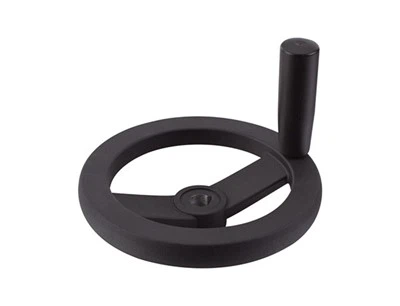
In the realm of industrial equipment and machinery, handwheels play a crucial role in providing operators with a means to control and adjust various mechanisms. Among the diverse types of handwheels available in the market, two - spoke handwheels have emerged as a popular option. As a supplier of Two-spoke Handwheels, I often encounter the question: Are two - spoke handwheels more comfortable to use than other types? In this blog, we will delve into this topic, examining the features of two - spoke handwheels and comparing them with other common types of handwheels to determine their comfort levels.
Understanding Two - Spoke Handwheels
Two - spoke handwheels are characterized by their simple yet effective design, consisting of two spokes connecting the outer rim to the central hub. This design offers several advantages that contribute to their comfort and usability. Firstly, the open design of two - spoke handwheels allows for easy access to the central area, which can be beneficial when the handwheel needs to be mounted close to other components or when operators need to reach through the handwheel to access additional controls.
The two - spoke configuration also provides a natural grip for the hand. When using a two - spoke handwheel, the user can comfortably place their fingers on the spokes, distributing the force evenly across the hand. This reduces the strain on individual fingers and joints, especially during prolonged use. Additionally, the spokes can be designed with ergonomic contours to further enhance the grip and comfort.
Comparing with Solid Handwheels
Solid Handwheels are another common type of handwheel. They feature a continuous, solid outer rim without any spokes. While solid handwheels offer a smooth and uninterrupted surface for gripping, they may not be as comfortable as two - spoke handwheels in some situations.
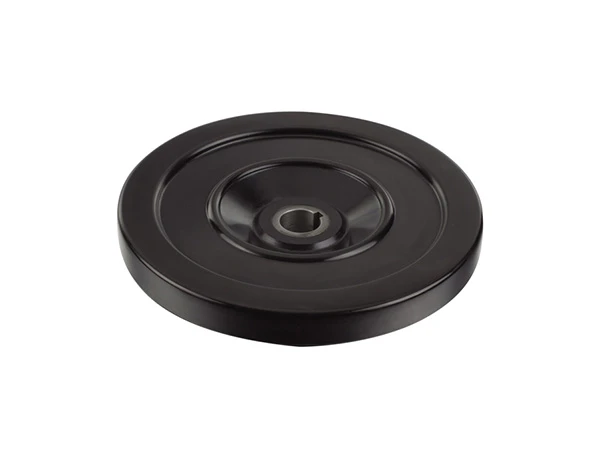

One of the main drawbacks of solid handwheels is the lack of ventilation. When the hand is in contact with the solid surface for an extended period, it can become sweaty, which may reduce the grip and cause discomfort. In contrast, the open design of two - spoke handwheels allows air to circulate around the hand, keeping it cool and dry.
Another aspect to consider is the flexibility of the grip. With a solid handwheel, the user's hand is limited to gripping the outer rim. This can be a problem if the user needs to apply different levels of force or if they have a smaller or larger hand size. Two - spoke handwheels, on the other hand, offer more flexibility in terms of grip. The user can adjust their grip on the spokes depending on the task at hand, making it more adaptable to different hand sizes and force requirements.
Comparing with Position Indicator Handwheels
Position Indicator Handwheels are designed with an additional feature of indicating the position of the mechanism being controlled. These handwheels often have a more complex design, with additional components such as dials or pointers.
While position indicator handwheels are useful for applications where precise positioning is required, their complexity can sometimes affect the comfort of use. The additional components may add weight to the handwheel, making it more tiring to turn. Moreover, the presence of these components can also limit the space available for gripping, potentially causing discomfort for the user.
Two - spoke handwheels, with their simple and lightweight design, are generally easier to operate. They do not have the extra weight or restricted grip area associated with position indicator handwheels, making them a more comfortable choice for tasks that do not require precise position indication.
Factors Affecting Comfort
In addition to the design differences between handwheel types, there are several other factors that can affect the comfort of using a handwheel. These include the material of the handwheel, the size of the handwheel, and the nature of the task.
The material of the handwheel can have a significant impact on comfort. Handwheels made of soft, rubber - like materials are generally more comfortable to grip than those made of hard plastics or metals. Rubber materials provide a better cushioning effect, reducing the pressure on the hand. As a supplier, we offer two - spoke handwheels in a variety of materials, including rubber - coated options, to enhance comfort.
The size of the handwheel also matters. A handwheel that is too small may require the user to use excessive force to turn it, while a handwheel that is too large may be difficult to handle. It is important to choose a handwheel size that is appropriate for the user's hand size and the requirements of the task. Two - spoke handwheels are available in a range of sizes, allowing for a better fit.
The nature of the task can also influence comfort. For tasks that require frequent and rapid turning of the handwheel, a lightweight and easy - to - grip handwheel like the two - spoke handwheel is more suitable. On the other hand, for tasks that require slow and precise adjustments, a position indicator handwheel may be more appropriate, despite its potential comfort drawbacks.
Conclusion
In conclusion, two - spoke handwheels offer several advantages in terms of comfort compared to other types of handwheels. Their open design, natural grip, and ventilation properties make them a comfortable choice for many applications. While solid handwheels and position indicator handwheels have their own unique features and uses, they may not be as comfortable as two - spoke handwheels in certain situations.
If you are in the market for handwheels and are looking for a comfortable and reliable option, Two-spoke Handwheels are definitely worth considering. We, as a supplier of two - spoke handwheels, are committed to providing high - quality products that meet the needs of our customers. Whether you are an industrial manufacturer, a machinery operator, or an equipment designer, we can offer you the right handwheel solution.
If you have any questions or would like to discuss your specific requirements, please feel free to contact us. We are ready to assist you in making the best choice for your application and look forward to the opportunity to engage in procurement discussions with you.
References
- Ergonomics in Industrial Handwheel Design: A Review. Journal of Industrial Ergonomics.
- Comparative Analysis of Different Types of Handwheels in Industrial Applications. International Journal of Mechanical Engineering.