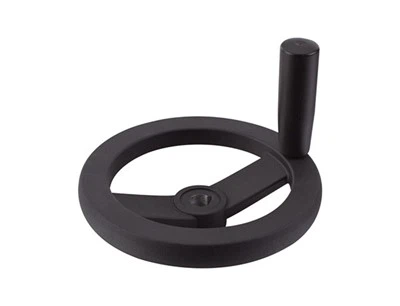
Hey there! As a supplier of Lathe Crank Handles, I often get asked some interesting questions about the compatibility of different parts in lathe machines. One question that pops up quite a bit is, "Can a lathe crank handle be used in a lathe with a hydraulic system?" Let's dig into this topic and find out.
First off, let's understand what a lathe crank handle is and what a hydraulic lathe system does. A lathe crank handle is a simple yet essential tool. It's used to manually control the movement of various parts on a lathe, like the cross-slide or the compound rest. You turn the handle, and it moves the part in a specific direction. It gives the operator a hands - on feel and precise control over the machining process. On the other hand, a hydraulic system in a lathe is a more advanced setup. It uses pressurized fluid to power different functions. Hydraulic systems can provide more force, faster movements, and can be automated to a certain extent.
Now, the big question: can a lathe crank handle work in a lathe with a hydraulic system? The short answer is, it depends. There are a few factors we need to consider.
Compatibility of the Mechanical Interface
The first thing to look at is the mechanical interface. A lathe crank handle needs to fit properly onto the part it's supposed to control. In a hydraulic lathe, the parts that are usually powered by the hydraulic system might have a different design compared to a traditional manual lathe. For example, the shaft where the crank handle attaches could be a different size or have a different type of connection. Some hydraulic lathes are designed to be fully automated, and they might not have a place to attach a crank handle at all. However, there are many hydraulic lathes that still have manual override options. These are backup features that allow the operator to take control manually in case of a hydraulic system failure or for fine - tuning certain operations. In these cases, a lathe crank handle can be used if it has the right mechanical fit.


Control Requirements
Another important factor is the control requirements. In a manual lathe, the operator uses the crank handle to make small, incremental movements. The control is very direct - you turn the handle, and the part moves. In a hydraulic lathe, the hydraulic system is designed to provide quick and powerful movements. The control mechanism is often based on valves and pumps that are regulated by electrical or mechanical signals. If you try to use a lathe crank handle in a hydraulic system without proper adaptation, you might not be able to achieve the same level of control. For instance, if the hydraulic system is set to move a part at a certain speed and force, turning a crank handle might not be able to override or fine - tune that movement effectively. But, if the hydraulic system has a manual control mode that is designed to be used with a crank handle, then it can work well.
Safety Considerations
Safety is always a top priority when using any machinery. When considering using a lathe crank handle in a hydraulic lathe, there are some safety aspects to think about. In a hydraulic system, there is a lot of pressure involved. If the crank handle is not properly installed or if it interferes with the normal operation of the hydraulic system, it could lead to dangerous situations. For example, if the crank handle gets caught in a moving part of the hydraulic system, it could cause the system to malfunction or even cause an accident. So, before using a lathe crank handle in a hydraulic lathe, make sure to check the safety guidelines provided by the lathe manufacturer.
Types of Lathe Crank Handles
At our company, we offer different types of lathe crank handles, such as Ball Crank Handles and Revolving Ball Crank Handles. These handles have different features that might affect their compatibility with a hydraulic lathe.
Ball crank handles are known for their ergonomic design. The ball at the end of the handle provides a comfortable grip, which is great for long - term use. They are often used in applications where the operator needs to make precise movements. In a hydraulic lathe, a ball crank handle could be useful for the manual override function, especially if the operator needs to make small adjustments.
Revolving ball crank handles, on the other hand, have an additional feature of rotation. This can be very handy when you need to change the direction of the handle quickly. In a hydraulic lathe, this rotation feature could be beneficial if you need to access the handle from different angles or if you need to make quick changes in the direction of movement.
Advantages of Using a Lathe Crank Handle in a Hydraulic Lathe
Despite the challenges, there are some advantages to using a lathe crank handle in a hydraulic lathe.
- Precision Control: As mentioned earlier, a crank handle allows for very precise, incremental movements. In some operations, like finishing a part, the operator might need to make very small adjustments that are easier to achieve with a crank handle than with the hydraulic system.
- Backup Option: In case of a hydraulic system failure, having a lathe crank handle can be a lifesaver. It allows the operator to continue the operation manually until the hydraulic system is repaired.
- Operator Comfort: Some operators prefer the hands - on feel of a crank handle. It gives them a better sense of control and can reduce fatigue during long machining sessions.
How to Determine Compatibility
If you're thinking about using a lathe crank handle in a hydraulic lathe, here are some steps you can take to determine compatibility:
- Check the Lathe Manual: The first step is to check the manual of your hydraulic lathe. It should have information about whether a manual override option is available and what type of crank handle can be used.
- Measure the Interface: Measure the size and shape of the shaft or connection point where the crank handle will be attached. Compare these measurements with the specifications of the crank handle you want to use.
- Consult the Manufacturer: If you're still unsure, contact the manufacturer of the lathe or the crank handle. They can provide you with more detailed information and advice.
In conclusion, while it's not always straightforward to use a lathe crank handle in a lathe with a hydraulic system, it is possible in many cases. With the right compatibility, proper installation, and consideration of safety and control requirements, a lathe crank handle can be a useful addition to a hydraulic lathe.
If you're interested in purchasing high - quality lathe crank handles for your hydraulic lathe or any other type of lathe, we're here to help. We offer a wide range of Lathe Crank Handles that are designed to meet different needs. Whether you need a ball crank handle or a revolving ball crank handle, we have the right product for you. Feel free to reach out to us to discuss your specific requirements and start a procurement negotiation. We're looking forward to working with you!
References
- "Machine Tool Handbook" by Oberg, Jones, and Horton.
- "Hydraulic Systems: Design, Installation, and Maintenance" by various industry experts.