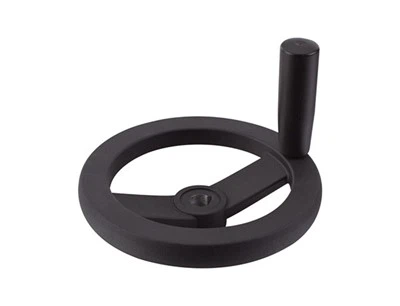
Can handwheels be used in ceramic manufacturing equipment? This is a question that often comes up among those in the ceramic industry. As a handwheel supplier, I've had the opportunity to explore this topic in depth and understand the potential applications and benefits of handwheels in ceramic manufacturing.
The Role of Precision in Ceramic Manufacturing
Ceramic manufacturing is a process that demands a high level of precision. From shaping the raw clay to glazing and firing, every step requires careful control to ensure the final product meets the desired quality standards. Precision is crucial in determining the size, shape, and texture of the ceramic pieces. For example, when creating ceramic tiles, even a slight deviation in size can lead to uneven installation and a less aesthetically pleasing result.
Handwheels are well - known for their ability to provide precise control. They allow operators to make fine adjustments with ease. In ceramic manufacturing equipment, this precision can be used in various ways. For instance, in a ceramic molding machine, a handwheel can be used to adjust the pressure or the position of the mold. This ensures that the clay is shaped accurately, resulting in consistent and high - quality ceramic products.
Types of Handwheels Suitable for Ceramic Manufacturing
There are several types of handwheels that can be used in ceramic manufacturing equipment. One popular option is the Pretty Solid Handwheels. These handwheels are known for their durability and smooth operation. They are made from high - quality materials that can withstand the harsh conditions often found in ceramic manufacturing environments, such as exposure to dust and moisture.
Another type is the Stainless Steel Spoked Handwheel. Stainless steel is resistant to corrosion, which is important in a ceramic manufacturing setting where there may be contact with water - based glazes and cleaning agents. The spoked design provides a good grip, allowing operators to turn the handwheel with ease, even when their hands are wet or dirty.
The 3 Spoke Handwheel is also a great choice. Its simple yet effective design makes it easy to install and operate. The three - spoke configuration offers a balanced and comfortable grip, enabling precise control over the equipment.
Applications of Handwheels in Ceramic Manufacturing Equipment
- Molding and Shaping: In ceramic molding machines, handwheels can be used to adjust the position of the mold, the pressure applied to the clay, and the speed of the molding process. This allows for the creation of complex shapes and sizes with high precision. For example, in the production of ceramic vases, a handwheel can be used to control the shape of the vase as it is being formed on the wheel.
- Glazing and Coating: Handwheels can be incorporated into glazing and coating equipment. They can be used to adjust the flow rate of the glaze, the angle of the spray nozzle, and the distance between the nozzle and the ceramic piece. This ensures an even and consistent coating, enhancing the appearance and quality of the final product.
- Firing and Kiln Control: In kilns, handwheels can be used to control the temperature, the ventilation, and the firing time. Precise control of these parameters is essential for achieving the desired properties of the ceramic, such as strength, color, and porosity. For instance, a handwheel can be used to adjust the damper in the kiln, which affects the airflow and, consequently, the firing temperature.
Advantages of Using Handwheels in Ceramic Manufacturing
- Cost - Effective: Handwheels are relatively inexpensive compared to other types of control mechanisms, such as electronic sensors and actuators. They require minimal maintenance and have a long service life, making them a cost - effective solution for ceramic manufacturing equipment.
- Ease of Use: Handwheels are simple to operate, even for operators with limited technical knowledge. They provide a direct and intuitive way to control the equipment, reducing the learning curve and increasing productivity.
- Reliability: Mechanical handwheels are less prone to failure compared to electronic components. They can operate in harsh environments without being affected by electrical interference or software glitches, ensuring the continuous operation of the ceramic manufacturing equipment.
Considerations When Using Handwheels in Ceramic Manufacturing
While handwheels offer many benefits, there are also some considerations to keep in mind. Firstly, the handwheel should be properly sized and designed for the specific application. A handwheel that is too small may be difficult to turn, while one that is too large may be cumbersome and take up too much space.
Secondly, the handwheel material should be selected based on the environmental conditions in the ceramic manufacturing facility. As mentioned earlier, stainless steel is a good choice for its corrosion resistance, but other materials may be more suitable depending on the specific requirements.
Finally, regular maintenance is essential to ensure the proper functioning of the handwheels. This includes cleaning, lubrication, and inspection for wear and tear.
Conclusion
In conclusion, handwheels can definitely be used in ceramic manufacturing equipment. They offer precision control, cost - effectiveness, ease of use, and reliability. With the right selection of handwheel type and proper maintenance, they can significantly enhance the performance and quality of ceramic manufacturing processes.
If you are in the ceramic manufacturing industry and are interested in exploring the use of handwheels in your equipment, I encourage you to reach out for a detailed discussion. We can help you select the most suitable handwheels for your specific needs and provide all the necessary support for installation and maintenance. Let's work together to improve the efficiency and quality of your ceramic manufacturing operations.


References
- Ceramic Manufacturing Handbook, 2nd Edition
- Industrial Control Mechanisms: A Comprehensive Guide
- Handbook of Materials for Manufacturing Equipment