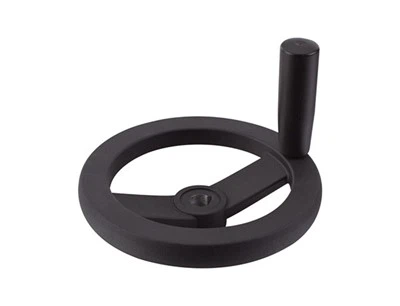
In the realm of industrial and mechanical equipment, crank handles play a crucial role in providing manual control for various operations. Among the different types of crank handles available in the market, fold - away crank handles and non - foldable ones are two popular options. As a supplier of Fold - away Crank Handles, I have had the opportunity to closely observe the characteristics and applications of both types, and in this blog, I will compare them to help you make an informed decision when choosing the right crank handle for your needs.


Design and Space Utilization
One of the most significant differences between fold - away crank handles and non - foldable ones lies in their design and the way they utilize space. Non - foldable crank handles are typically fixed in an extended position. They protrude outwards from the equipment, which means they require a certain amount of clearance around the handle to be operated safely and effectively. This can be a drawback in environments where space is limited. For example, in a crowded workshop or a compact machinery setup, a non - foldable crank handle may interfere with other components or pose a risk of being accidentally bumped into, potentially causing damage to the handle or the equipment.
On the other hand, fold - away crank handles are designed to be retractable. When not in use, they can be folded flat against the equipment, significantly reducing the amount of space they occupy. This feature makes them an ideal choice for applications where space is at a premium. For instance, in mobile machinery or equipment that needs to be transported frequently, fold - away crank handles can prevent the handles from getting damaged during transit and also make the equipment more compact and easier to handle. You can explore our range of Fold - away Crank Handles to see how they can optimize space in your setup.
Safety Considerations
Safety is always a top priority in any industrial or mechanical environment. Non - foldable crank handles, due to their extended position, can present a safety hazard. In busy work areas, workers may accidentally catch their clothing or body parts on the protruding handle, leading to injuries. Additionally, in high - traffic areas, the extended handles can be a tripping or collision hazard.
Fold - away crank handles offer enhanced safety features. When folded, they are less likely to cause accidental injuries as they are flush with the equipment surface. This reduces the risk of snagging and tripping, making the work environment safer for employees. Moreover, in applications where there are moving parts or rotating machinery nearby, the ability to fold the handle away can prevent it from getting caught in the machinery, which could lead to serious damage and potential safety incidents.
Ease of Use
The ease of use of a crank handle is another important factor to consider. Non - foldable crank handles are generally straightforward to operate. Once installed, they are always in a ready - to - use position, and users can simply grasp the handle and start turning. However, in some cases, the fixed position may limit the range of motion or access to the handle, especially in tight spaces.
Fold - away crank handles, while they require an additional step of unfolding before use, offer greater flexibility. They can be adjusted to different angles and positions, allowing users to find the most comfortable and efficient way to operate the handle. This is particularly beneficial in applications where the user needs to access the handle from different directions or in awkward positions. For example, in a lathe operation, a Lathe Crank Handle that can be folded away when not in use and adjusted to the right angle during operation can improve the user experience and productivity.
Durability and Maintenance
The durability of a crank handle is crucial for long - term performance. Non - foldable crank handles are often simpler in design, with fewer moving parts. This can make them more robust and less prone to mechanical failures. They are generally made of high - quality materials such as steel or aluminum, which can withstand heavy use and harsh working conditions. However, the exposed position of non - foldable handles may make them more susceptible to damage from impacts, corrosion, and wear.
Fold - away crank handles, although they have more complex mechanisms due to their folding feature, are also built to be durable. Modern fold - away crank handles are designed with high - precision components and reliable locking mechanisms to ensure smooth operation and long - term performance. The ability to fold the handle away can also protect it from damage when not in use, extending its lifespan. Regular maintenance of fold - away crank handles typically involves checking the folding mechanism and lubricating the moving parts to ensure smooth operation.
Cost - Effectiveness
Cost is an important consideration for any business. Non - foldable crank handles are usually less expensive to manufacture due to their simpler design. This can make them a more cost - effective option for applications where space and safety are not major concerns and where a large number of handles are required.
However, when considering the overall cost - effectiveness, fold - away crank handles may offer better value in the long run. Their space - saving and safety features can lead to reduced equipment damage, fewer workplace injuries, and increased productivity. In addition, the extended lifespan of fold - away crank handles due to their protective folding design can result in lower replacement costs over time.
Applications
The choice between fold - away and non - foldable crank handles also depends on the specific application. Non - foldable crank handles are commonly used in applications where continuous access to the handle is required and where there is sufficient space. For example, in large industrial machinery such as presses and conveyors, non - foldable handles can provide a stable and reliable means of manual control.
Fold - away crank handles are well - suited for a wide range of applications, especially those where space is limited or safety is a concern. They are commonly used in aerospace, automotive, and medical equipment, as well as in mobile machinery and portable devices. For example, in aircraft maintenance, fold - away crank handles can be used to adjust various components without taking up too much space in the cramped aircraft interior. In the automotive industry, they can be found in engine compartments and adjustable seats to provide a compact and safe manual control option.
Conclusion
In conclusion, both fold - away crank handles and non - foldable ones have their own advantages and disadvantages. The choice between the two depends on various factors such as space availability, safety requirements, ease of use, durability, cost - effectiveness, and specific application needs. As a supplier of Fold - away Crank Handles, I believe that fold - away crank handles offer a more versatile and practical solution for many modern industrial and mechanical applications.
If you are looking for a reliable and high - quality crank handle for your equipment, I encourage you to consider our range of fold - away crank handles. Our products are designed to meet the highest standards of quality and performance, and we are committed to providing excellent customer service. Whether you need a handle for a specific project or are looking to upgrade your existing equipment, we can help you find the right solution. Feel free to contact us to discuss your requirements and start a procurement negotiation. We look forward to working with you to meet your crank handle needs.
References
- "Industrial Design Handbook" - A comprehensive guide to industrial design principles and applications.
- "Safety in Mechanical Engineering" - A publication focusing on safety considerations in mechanical equipment design and operation.
- "Crank Handle Manufacturing Standards" - Industry standards and guidelines for the manufacturing of crank handles.