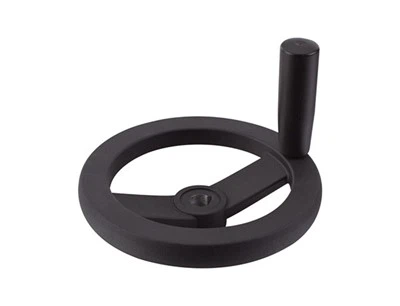
Hey there! As a solid handwheels supplier, I often get asked about how to test the performance of these nifty tools. Solid handwheels are used in a wide range of industries, from manufacturing to automation, and ensuring their performance is crucial for smooth operations. In this blog, I'll share some practical ways to test the performance of solid handwheels.


1. Material and Build Quality Check
The first step in testing solid handwheels is to take a close look at their material and build quality. The material of a handwheel can greatly affect its performance, durability, and resistance to wear and tear.
- Visual Inspection: Start by visually inspecting the handwheel. Look for any signs of cracks, chips, or uneven surfaces. A well - made handwheel should have a smooth finish, and all the components should be properly assembled. For example, if it's a spoked handwheel, the spokes should be firmly attached to the hub. You can check out Spoked Handwheels to see the typical design and quality you should expect.
- Material Testing: If possible, conduct some basic material tests. For metal handwheels, you can check for hardness using a simple hardness tester. A harder material generally means better wear resistance. For plastic handwheels, check for flexibility and brittleness. You can try bending the handwheel slightly (within a safe limit) to see if it cracks or deforms.
2. Torque Testing
Torque is a key factor when it comes to the performance of handwheels. It refers to the amount of force required to turn the handwheel.
- Using a Torque Wrench: To test the torque of a handwheel, you'll need a torque wrench. First, attach the torque wrench to the handwheel's shaft. Then, slowly start turning the handwheel while monitoring the torque reading on the wrench. The torque required to turn the handwheel should be consistent throughout the rotation. If there are sudden spikes or drops in torque, it could indicate a problem with the handwheel's internal mechanism or the fit between the handwheel and the shaft.
- Comparative Testing: It's also a good idea to compare the torque of different handwheels. This can help you identify if a particular handwheel is out of the normal range. For example, if you have a batch of handwheels from the same manufacturer, test a few of them. If one handwheel requires significantly more or less torque than the others, it might be defective.
3. Rotational Smoothness
A smooth - rotating handwheel is essential for easy operation.
- Manual Inspection: Simply hold the handwheel and turn it by hand. Pay attention to how smoothly it rotates. There should be no jerks, wobbles, or excessive resistance. If you feel any roughness or irregularities, it could be due to misaligned components, dirt or debris inside the handwheel, or a problem with the bearings (if the handwheel has them).
- Using a Rotational Sensor: For a more accurate assessment, you can use a rotational sensor. This device can measure the angular velocity and acceleration of the handwheel as it rotates. By analyzing the data from the sensor, you can detect any subtle variations in the rotational smoothness that might not be noticeable during a manual inspection.
4. Load - Bearing Capacity
Solid handwheels are often used to apply force or control the movement of heavy equipment. Therefore, testing their load - bearing capacity is crucial.
- Static Load Testing: Place a known weight on the handwheel while it is in a stationary position. Make sure the weight is evenly distributed. Observe the handwheel for any signs of deformation or damage. For example, if the handwheel starts to crack or the shaft bends under the load, it means the handwheel's load - bearing capacity is insufficient.
- Dynamic Load Testing: In addition to static load testing, it's also important to test the handwheel under dynamic conditions. This can be done by attaching the handwheel to a test rig and applying a load while the handwheel is in motion. Monitor the handwheel's performance during the test, including its rotational smoothness and any changes in torque requirements.
5. Environmental Resistance
Handwheels are often exposed to various environmental conditions, such as moisture, dust, and chemicals. Testing their environmental resistance can help ensure their long - term performance.
- Moisture Resistance: You can simulate a moist environment by placing the handwheel in a humidity chamber. Set the chamber to a specific humidity level and temperature, and leave the handwheel inside for a certain period of time. After that, check for any signs of rust (if it's a metal handwheel) or swelling (if it's a plastic handwheel).
- Dust and Chemical Resistance: To test dust resistance, you can expose the handwheel to a controlled amount of dust. Then, check if the dust has entered the handwheel's internal components and if it has affected the handwheel's performance. For chemical resistance, you can apply a small amount of a relevant chemical (such as a cleaning agent or a lubricant) to the handwheel and observe any changes in its appearance or performance.
6. Ergonomics Testing
Since handwheels are operated by hand, their ergonomic design is important for user comfort and efficiency.
- Grip Comfort: Have different people hold the handwheel and rate its grip comfort. Factors such as the shape, size, and surface texture of the handwheel can affect how comfortable it is to hold. A handwheel with a too - small or too - large diameter, or a rough surface, can cause discomfort and fatigue during long - term use.
- Ease of Operation: Observe how easily the handwheel can be turned in different positions. For example, test it when the handwheel is at different heights and angles. A well - designed handwheel should be easy to operate regardless of its orientation.
7. Durability Testing
To ensure that the handwheels will last a long time, durability testing is necessary.
- Cyclic Testing: Use a testing machine to subject the handwheel to a large number of cycles of rotation. This simulates the real - world usage of the handwheel over time. Monitor the handwheel for any signs of wear, such as worn - out surfaces, loose components, or a decrease in performance.
- Impact Testing: Drop the handwheel from a certain height onto a hard surface (while following safety precautions). This tests the handwheel's ability to withstand impacts. If the handwheel breaks or gets damaged during the impact test, it may not be suitable for applications where it could be subjected to accidental knocks.
8. Compatibility Testing
Handwheels need to be compatible with the equipment they are used with.
- Shaft Fit: Check the fit between the handwheel's bore and the shaft it is intended to be mounted on. The bore diameter should match the shaft diameter precisely. A loose fit can cause the handwheel to wobble, while a too - tight fit can make it difficult to install or remove the handwheel.
- Mounting Compatibility: Ensure that the handwheel can be easily mounted on the equipment using the appropriate mounting hardware. Test the alignment of the mounting holes and the stability of the handwheel once it is mounted.
If you're in the market for high - quality solid handwheels or need more information about testing their performance, feel free to reach out. We're here to help you find the best handwheels for your specific needs and ensure that they meet your performance requirements. Whether you're looking for Internal Handwheels, Indicator Handwheels, or Spoked Handwheels, we've got you covered. Contact us to start a procurement discussion and let's work together to get the right handwheels for your operations.
References
- Machinery's Handbook, 31st Edition
- ASTM International Standards related to handwheel testing
- Industry - specific guidelines on handwheel performance and quality control