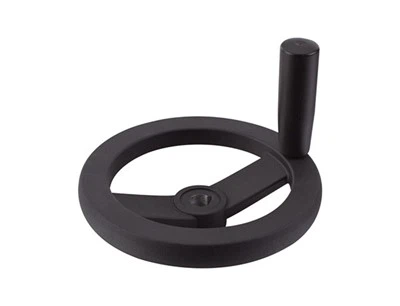
As a seasoned supplier of general handles, I've delved deep into the various aspects of these seemingly simple yet crucial components. One question that often arises in technical discussions and product evaluations is the heat - dissipation ability of a general handle. In this blog, I'll share my insights based on years of experience in the industry.
The Basics of Heat Dissipation
Before we explore the heat - dissipation ability of general handles, it's essential to understand the basic principles of heat transfer. Heat can be transferred through three main mechanisms: conduction, convection, and radiation.
Conduction is the transfer of heat through a solid material. When a handle is in contact with a hot surface, heat will flow from the hot object to the handle via conduction. The rate of conduction depends on the thermal conductivity of the handle material. For example, metals generally have high thermal conductivity, meaning they can conduct heat quickly. Materials like copper and aluminum are well - known for their excellent heat - conducting properties.
Convection involves the transfer of heat through the movement of fluids (liquids or gases). When the handle heats up, the surrounding air or liquid will carry the heat away as it moves around the handle. The efficiency of convection depends on factors such as the surface area of the handle, the velocity of the fluid flow, and the temperature difference between the handle and the fluid.
Radiation is the emission of electromagnetic waves from a heated object. All objects above absolute zero temperature emit radiation. The amount of radiation depends on the surface properties of the handle, such as its emissivity, and its temperature.
Heat Dissipation in General Handles
General handles come in a wide variety of types, including Fold - away Handles, Threaded Revolving Handles, and Revolving Cylindrical Handle. Each type may have different heat - dissipation characteristics due to their design and material.
Material Selection
The choice of material has a significant impact on the heat - dissipation ability of a handle. As mentioned earlier, metals are good conductors of heat. Handles made of aluminum, for instance, can quickly transfer heat away from the source. Aluminum has a relatively high thermal conductivity, which allows it to distribute heat evenly across its surface. This means that the heat is not concentrated in one area, reducing the risk of overheating in a particular spot.
Plastic handles, on the other hand, have much lower thermal conductivity compared to metals. While this may seem like a disadvantage in terms of heat dissipation, it can actually be beneficial in some applications. For example, in situations where the user needs to hold the handle while the attached device is hot, a plastic handle can act as an insulator, preventing the user from getting burned. However, if the handle is part of a system where heat needs to be dissipated quickly, plastic may not be the best choice.
Design Considerations
The design of the handle also plays a crucial role in heat dissipation. A handle with a larger surface area will have more contact with the surrounding air or fluid, which can enhance convection. For example, a handle with fins or ridges can significantly increase its surface area. These additional surface features create more paths for the fluid to flow around the handle, carrying away more heat.
The shape of the handle can also affect heat transfer. A handle with a streamlined shape may allow for better fluid flow around it, improving convection. Additionally, a handle that is designed to rotate, such as a revolving handle, can help to mix the surrounding air, increasing the efficiency of heat transfer.
Factors Affecting Heat Dissipation in Real - World Applications
In real - world applications, several factors can influence the heat - dissipation ability of a general handle.
Environmental Conditions
The temperature and humidity of the environment can have a significant impact on heat transfer. In a hot and humid environment, the air may already be saturated with moisture, reducing its ability to carry away heat through convection. Additionally, high humidity can cause condensation on the handle, which can affect its surface properties and potentially reduce its heat - dissipation efficiency.
The presence of air or fluid flow in the environment is also crucial. In a well - ventilated area, the handle will experience better convection due to the constant flow of fresh air. On the other hand, in a confined space with little air movement, heat dissipation may be severely limited.
Operating Conditions
The intensity and duration of the heat source are important factors. If the handle is in contact with a very hot object for a long time, it will reach a higher temperature, which can affect its performance. Additionally, if the handle is subjected to intermittent heat sources, its heat - dissipation ability needs to be able to handle the rapid changes in temperature.


Measuring Heat Dissipation
To accurately assess the heat - dissipation ability of a general handle, several methods can be used. One common method is to measure the temperature of the handle over time using thermocouples or infrared thermometers. By monitoring the temperature rise and fall, we can determine how quickly the handle dissipates heat.
Another approach is to use computational fluid dynamics (CFD) simulations. CFD can model the flow of air or fluid around the handle and predict the heat transfer rates. This method allows us to optimize the design of the handle before it is manufactured, saving time and resources.
Importance of Heat Dissipation in General Handles
The heat - dissipation ability of a general handle is not just a technical curiosity; it has practical implications in many applications. In industrial settings, handles on machinery may be exposed to high - temperature components. If the handle cannot dissipate heat effectively, it may become too hot to touch, which can pose a safety risk to the operators.
In electronic devices, handles may be used to carry or move the equipment. Effective heat dissipation can prevent the build - up of heat inside the device, which can damage sensitive electronic components and reduce the lifespan of the device.
Conclusion
In conclusion, the heat - dissipation ability of a general handle is a complex topic that depends on various factors, including material selection, design, environmental conditions, and operating conditions. As a general handle supplier, I understand the importance of providing handles that can meet the specific heat - dissipation requirements of different applications.
Whether you are looking for a handle with excellent heat - dissipation properties or one that can act as an insulator, we have a wide range of options to choose from, including Fold - away Handles, Threaded Revolving Handles, and Revolving Cylindrical Handle. If you have any questions or need further information about our products, please feel free to contact us for a procurement discussion.
References
- Incropera, F. P., & DeWitt, D. P. (2002). Fundamentals of Heat and Mass Transfer. John Wiley & Sons.
- Holman, J. P. (2002). Heat Transfer. McGraw - Hill.