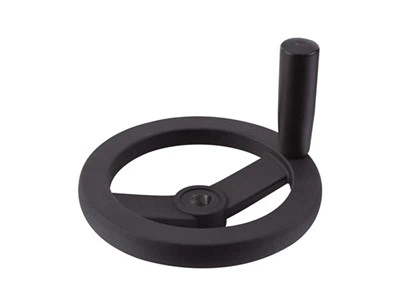
Hey there! As a supplier of Lathe Crank Handles, I often get asked about the magnetic properties of these nifty tools. So, let's dive right in and explore what's going on with the magnetism of a lathe crank handle, if there even is any.
First off, let's understand what a lathe crank handle is. A Lathe Crank Handle is a crucial part of a lathe machine. It's used to manually control the movement of different components of the lathe, like the cross-slide or the compound rest. You turn the handle, and it moves the part you're working on in a precise way. It's like the steering wheel of the lathe, giving you that hands - on control.
Now, onto the magnetic property question. In most cases, lathe crank handles are not inherently magnetic. The materials commonly used to make them play a big role here. Many lathe crank handles are made from metals like aluminum, brass, or stainless steel. Aluminum is a non - magnetic metal. It doesn't have the internal structure that allows it to be attracted to a magnet. Brass, which is an alloy of copper and zinc, is also non - magnetic. And stainless steel? Well, a lot of the types used for lathe crank handles are non - magnetic too. The austenitic stainless steels, for example, don't show magnetic behavior.
But why are these non - magnetic materials so popular for making lathe crank handles? There are a few good reasons. First, non - magnetic materials are less likely to attract metal shavings and debris. When you're using a lathe, there's going to be a lot of metal being cut and turned. If the crank handle was magnetic, it would act like a magnet for all those tiny metal pieces. That could cause problems. The shavings could get stuck in the moving parts of the handle, making it harder to turn or even causing damage over time.


Another reason is corrosion resistance. Aluminum, brass, and stainless steel are all pretty good at resisting corrosion. In a workshop environment, there might be moisture in the air, or you might be using coolants and lubricants that could cause rusting if the handle was made of a more reactive metal. Non - magnetic materials help keep the crank handle in good shape for a long time.
However, it's not always the case that lathe crank handles are non - magnetic. Sometimes, if a handle is made from a ferromagnetic material like carbon steel, it will be magnetic. Carbon steel contains iron, which is a ferromagnetic metal. Ferromagnetic materials have tiny magnetic domains within them. When an external magnetic field is applied, these domains align, and the material becomes magnetic.
The advantage of having a magnetic lathe crank handle in some situations is that it can help with tool retention. You could magnetically attach small tools or indicators to the handle, which might be useful for quick measurements or adjustments. But the problems with magnetic crank handles, like attracting metal shavings, are still valid.
At our supply business, we offer a variety of lathe crank handles to meet different needs. We have the Fold - away Crank Handles, which are great for saving space when not in use. They can be folded up neatly, so they don't get in the way. And then there are the Revolving Ball Crank Handles. These are designed for easy gripping and smooth turning, giving you more control over your lathe operations.
If you're in the market for lathe crank handles, you need to think about whether you want a magnetic one or not. Consider your working environment. If you're in a clean workspace with minimal metal debris, a magnetic handle might be an option. But if you're dealing with a lot of metal shavings, it's probably best to stick with a non - magnetic one.
We understand that every customer has unique requirements, and that's why we offer such a wide range of products. If you have any questions about the magnetic properties of our lathe crank handles or any other concerns, don't hesitate to reach out. Whether you need a handle for a small hobby lathe or a large industrial one, we've got you covered.
In conclusion, the magnetic property of a lathe crank handle depends on the material it's made from. Most of the time, they're non - magnetic for good reasons, but there are also magnetic options available for specific needs. We're here to help you find the perfect lathe crank handle for your workshop. So, if you're interested in making a purchase or just want to talk about your options, let's have a chat. I'm always eager to help you get the right tool for the job.
If you're ready to start the conversation about which lathe crank handle is best for you, don't wait. Connect with me, and let's get your lathe equipped with the handle it deserves.
References
- Smith, J. (2018). Handbook of Lathe Tools. Machinery Publishing.
- Brown, A. (2020). Metals and Their Properties in Industrial Applications. Workshop Press.