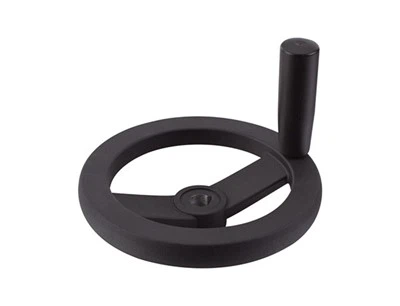
As a seasoned supplier of indicator handwheels, I often encounter inquiries from clients regarding the maximum axial force these handwheels can withstand. This is a crucial aspect, especially in industrial applications where precision and durability are of utmost importance. In this blog post, I will delve into the factors that determine the maximum axial force of indicator handwheels and provide some insights based on our extensive experience in the industry.
Understanding Axial Force in Indicator Handwheels
Axial force refers to the force applied along the axis of the handwheel. When an operator turns the handwheel, they exert a force that is transferred through the handwheel to the mechanism it is connected to. This force is responsible for moving the mechanism, whether it is adjusting a valve, controlling a machine tool, or performing any other function.
The maximum axial force that an indicator handwheel can withstand is determined by several factors, including the material of the handwheel, its design, and the quality of its manufacturing. Let's take a closer look at each of these factors.
Material of the Handwheel
The material of the handwheel plays a significant role in determining its strength and durability. Different materials have different mechanical properties, which affect their ability to withstand axial forces. Some of the common materials used in the manufacturing of indicator handwheels include:
- Stainless Steel: Stainless steel is a popular choice for handwheels due to its high strength, corrosion resistance, and aesthetic appeal. Stainless Steel Spoked Handwheel is a type of handwheel made from stainless steel. It offers excellent resistance to axial forces and is suitable for use in harsh environments.
- Aluminum: Aluminum is a lightweight material that is also relatively strong. It is often used in applications where weight is a concern, such as in aerospace or automotive industries. However, aluminum handwheels may not be as strong as stainless steel handwheels and may have a lower maximum axial force capacity.
- Plastic: Plastic handwheels are lightweight, inexpensive, and easy to manufacture. They are commonly used in applications where the axial force requirements are relatively low, such as in consumer products or light-duty industrial applications. However, plastic handwheels may not be suitable for use in high-stress environments or applications where durability is a concern.
Design of the Handwheel
The design of the handwheel also affects its ability to withstand axial forces. A well-designed handwheel will distribute the force evenly across its surface, reducing the stress on any one point. Some of the design features that can enhance the axial force capacity of a handwheel include:
- Spoked Design: A spoked handwheel has a series of spokes that connect the outer rim to the hub. This design distributes the force evenly across the handwheel, reducing the stress on any one spoke. Stainless Steel Spoked Handwheel is an example of a handwheel with a spoked design.
- Thick Rim: A thick rim can provide additional strength and support to the handwheel, allowing it to withstand higher axial forces. However, a thick rim may also make the handwheel heavier and more difficult to turn.
- Reinforced Hub: The hub is the central part of the handwheel that connects it to the shaft. A reinforced hub can provide additional strength and support to the handwheel, reducing the risk of failure under high axial forces.
Quality of Manufacturing
The quality of manufacturing also plays a crucial role in determining the maximum axial force that an indicator handwheel can withstand. A well-manufactured handwheel will be made from high-quality materials, using precise manufacturing processes. This will ensure that the handwheel has the required strength and durability to withstand the axial forces it is designed to handle.


Some of the quality control measures that can be used in the manufacturing of indicator handwheels include:
- Material Testing: The materials used in the manufacturing of the handwheel should be tested to ensure that they meet the required specifications. This can include testing for strength, hardness, and corrosion resistance.
- Dimensional Inspection: The handwheel should be inspected to ensure that it meets the required dimensional specifications. This can include checking the diameter, thickness, and hub size of the handwheel.
- Assembly Inspection: The handwheel should be inspected during the assembly process to ensure that it is properly assembled and that all the components are functioning correctly.
Determining the Maximum Axial Force
Determining the maximum axial force that an indicator handwheel can withstand is not a straightforward process. It requires a combination of theoretical calculations and practical testing. The following steps can be used to determine the maximum axial force of a handwheel:
- Identify the Application Requirements: The first step is to identify the application requirements, including the type of mechanism the handwheel will be used with, the operating conditions, and the required precision.
- Select the Appropriate Handwheel: Based on the application requirements, select the appropriate handwheel from the available options. Consider the material, design, and quality of the handwheel when making your selection.
- Calculate the Axial Force: Use theoretical calculations to estimate the axial force that the handwheel will be subjected to in the application. This can include considering the torque required to turn the mechanism, the friction between the handwheel and the shaft, and the efficiency of the mechanism.
- Conduct Practical Testing: Once the theoretical calculations have been completed, conduct practical testing to verify the maximum axial force that the handwheel can withstand. This can involve applying a gradually increasing axial force to the handwheel until it fails.
Conclusion
In conclusion, the maximum axial force that an indicator handwheel can withstand is determined by several factors, including the material of the handwheel, its design, and the quality of its manufacturing. By understanding these factors and following the steps outlined above, you can select the appropriate handwheel for your application and ensure that it has the required strength and durability to withstand the axial forces it is designed to handle.
If you are in the market for indicator handwheels, we invite you to explore our range of products, including Stainless Steel Spoked Handwheel, Internal Handwheels, and Pretty Solid Handwheels. Our handwheels are made from high-quality materials, using precise manufacturing processes, and are designed to meet the highest standards of quality and performance. Contact us today to discuss your requirements and learn more about how we can help you find the perfect handwheel for your application.
References
- Machinery's Handbook, 31st Edition
- Design of Machine Elements, 7th Edition
- Handbook of Mechanical Engineering Calculations, 4th Edition