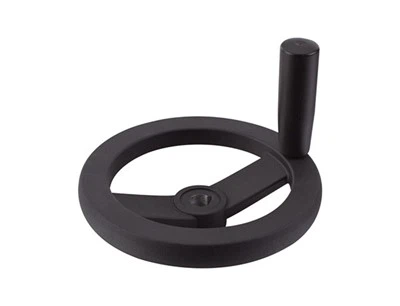
The rotational speed limit of straight crank handles is a crucial factor that impacts their performance, safety, and longevity. As a supplier of straight crank handles, understanding these limits is essential for providing our customers with the best products and advice.
Understanding Straight Crank Handles
Straight crank handles are simple yet effective mechanical devices used in various applications to convert rotary motion into linear motion or vice versa. They are commonly found in machinery, equipment, and tools where manual operation is required. Our Straight Crank Handles are designed with precision and durability in mind, catering to a wide range of industrial and commercial needs.
Factors Affecting Rotational Speed Limit
Several factors determine the rotational speed limit of straight crank handles. These include the material of the handle, the design and construction, the load it is expected to carry, and the environment in which it operates.
Material
The material of the straight crank handle plays a significant role in determining its rotational speed limit. Handles made from high - strength materials such as steel or aluminum can generally withstand higher rotational speeds compared to those made from plastic or other softer materials. Steel handles, for example, have excellent mechanical properties, including high tensile strength and good fatigue resistance. This allows them to maintain their integrity even at relatively high rotational speeds without experiencing excessive wear or deformation.
Design and Construction
The design and construction of the crank handle also influence its rotational speed limit. A well - designed handle with a proper balance between the length of the crank arm and the diameter of the grip can provide better control and stability during rotation. Handles with smooth surfaces and well - machined joints reduce friction, which in turn allows for higher rotational speeds. Additionally, the way the handle is attached to the shaft or mechanism affects its performance. A secure and rigid connection ensures that the handle can transfer the rotational force efficiently without any wobbling or loosening.
Load
The load carried by the straight crank handle is another critical factor. Higher loads require more torque to rotate the handle, which can limit the maximum rotational speed. When a handle is subjected to a heavy load, the stress on the handle increases, and at high speeds, this can lead to premature failure. For example, in a lathe application where the Lathe Crank Handle is used to control the movement of the cutting tool, the load on the handle depends on the cutting force and the feed rate. If the cutting force is high, the rotational speed of the handle must be carefully controlled to avoid damage.
Environment
The operating environment also impacts the rotational speed limit. In dusty or dirty environments, the presence of contaminants can increase friction between the handle and the shaft, reducing the maximum achievable rotational speed. High temperatures can cause the material of the handle to expand, which may affect its fit and performance. On the other hand, in cold environments, the material may become brittle, increasing the risk of breakage at high speeds.
Determining the Rotational Speed Limit
To determine the rotational speed limit of a straight crank handle, several methods can be used.
Theoretical Calculations
Based on the mechanical properties of the material, the geometry of the handle, and the load it is expected to carry, theoretical calculations can be performed. For example, using principles of mechanics and materials science, the stress and strain on the handle at different rotational speeds can be calculated. By comparing these values with the allowable stress and strain limits of the material, the maximum safe rotational speed can be estimated.
Experimental Testing
Experimental testing is another reliable method. By subjecting the handle to different rotational speeds under controlled conditions, its performance can be evaluated. This involves measuring parameters such as temperature rise, vibration, and wear rate. If the temperature of the handle rises significantly during rotation, it may indicate excessive friction, which could limit the speed. Similarly, excessive vibration can be a sign of imbalance or instability, which also affects the rotational speed limit.


Importance of Adhering to the Rotational Speed Limit
Adhering to the rotational speed limit is of utmost importance for several reasons.
Safety
Exceeding the rotational speed limit can pose a serious safety hazard. At high speeds, the handle may break or detach from the mechanism, causing injury to the operator. Additionally, if the handle is part of a larger machine, a failure of the handle can lead to the malfunction of the entire system, potentially resulting in more severe accidents.
Longevity
Operating the straight crank handle within its rotational speed limit helps to extend its lifespan. Excessive speeds can cause accelerated wear and tear on the handle, leading to premature failure. By following the recommended speed limit, the handle can maintain its performance and reliability over a longer period, reducing the need for frequent replacements.
Performance
Staying within the rotational speed limit ensures optimal performance of the handle. When the handle is rotated at a speed that is too high, it may become difficult to control, resulting in inaccurate operation. This can be particularly problematic in applications where precision is required, such as in the use of Ball Crank Handles for fine - tuning adjustments.
Our Role as a Supplier
As a supplier of straight crank handles, we are committed to providing our customers with accurate information about the rotational speed limits of our products. We conduct thorough testing and analysis during the product development process to determine the safe operating speeds for each handle. Our technical support team is also available to assist customers in selecting the right handle for their specific applications and to provide guidance on how to operate the handles within the recommended speed limits.
If you are in the market for high - quality straight crank handles, we invite you to explore our product range. Our Straight Crank Handles are designed to meet the highest standards of quality and performance. Whether you need handles for a small DIY project or a large industrial application, we have the right solution for you. We encourage you to contact us for more information and to discuss your specific requirements. Our team of experts is ready to assist you in making the best purchasing decision.
References
- "Mechanical Engineering Design" by Joseph E. Shigley and Charles R. Mischke.
- "Materials Science and Engineering: An Introduction" by William D. Callister Jr.
- Industry standards and guidelines related to the use of crank handles in machinery and equipment.